
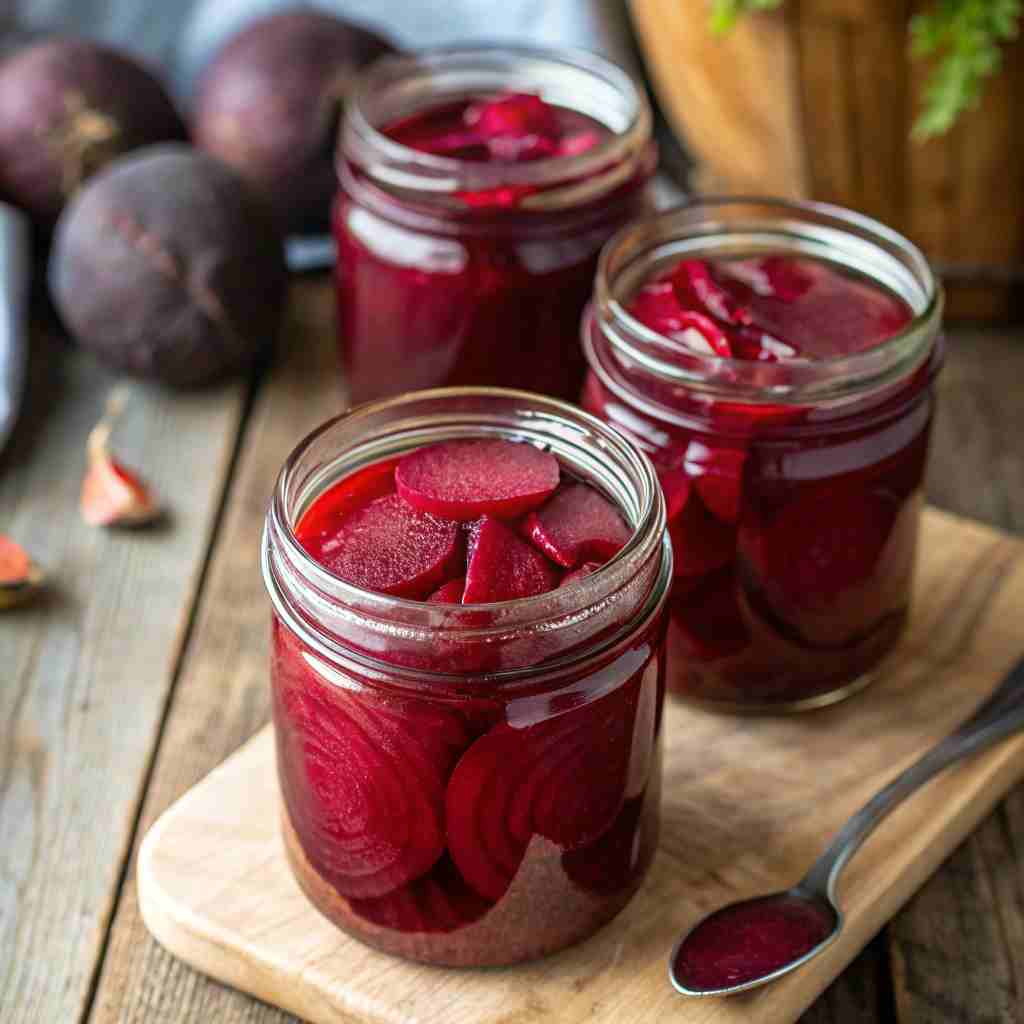
Canning Pickled Beets is a timeless and flavorful way to preserve the earthy sweetness of fresh beets in a tangy, aromatic brine. This classic recipe combines vinegar, sugar, and warm spices like cloves and cinnamon to create perfectly balanced, ruby-red pickled beets that stay vibrant and delicious for months. Ideal for beginners and seasoned canners alike, this easy process locks in both flavor and color, transforming simple beets into a gourmet condiment or side dish. Enjoy them with salads, sandwiches, or as a colorful addition to your dinner table , homemade pickled beets never go out of style.
Table of Contents
What are Canning Pickled Beets like?
Canning Pickled Beets is a classic preservation technique that transforms ordinary beets into a tangy, sweet, and slightly acidic delight. Imagine tender beet slices, vibrant in color, infused with a flavorful pickling brine made with vinegar, sugar, and aromatic spices like cloves and cinnamon. The canning process ensures that these ruby gems can be safely stored at room temperature, ready to brighten up any meal.
Pickled beets are perfect as a side dish, a topping for salads, or even a quirky addition to sandwiches. They offer a delightful contrast of textures and flavors that will tantalize your taste buds. Ready to experience the magic of homemade pickled beets? Let’s get started!
Key Ingredients for Canning Pickled Beets:
Here’s what you’ll need to create these beautiful and tasty pickled beets:
- Beets: 3 pounds, fresh, uniform in size for even cooking, scrubbed well and trimmed (leaving about 1 inch of stem and root).
- White Vinegar: 2 cups (5% acidity), essential for safe canning and creating the pickling flavor.
- Water: 1 cup, added to the brine to balance the acidity.
- Sugar: 1 cup, granulated, provides the necessary sweetness to balance the vinegar.
- Pickling Salt: 1 tablespoon, specifically designed for canning, without additives that could cloud the brine. Don’t use iodized table salt.
- Whole Cloves: 1 teaspoon, adds a warm, aromatic spice.
- Cinnamon Stick: 1, approximately 3 inches long, contributes to the sweet and comforting flavor profile.
- Optional: Mustard Seeds: 1 teaspoon, for an extra layer of savory flavor (optional).
How to Make Canning Pickled Beets:
This Canning Pickled Beets recipe is surprisingly simple and rewarding. In approximately two hours, you can transform a batch of garden-fresh beets into jars of tangy deliciousness ready to add a pop of color and flavor to your meals. The process involves cooking the beets until tender, preparing a sweet and tangy pickling brine, and properly canning the beets for long-term storage. The key to success is following the steps carefully to ensure both safety and flavor.
Step-by-Step Instructions:
Prepare the Beets: Wash the beets thoroughly under cold running water, scrubbing off any dirt. Trim the beet tops, leaving about 1 inch of stem attached to prevent color bleeding during cooking. Leave the root end intact as well.
Cook the Beets: Place the beets in a large pot and cover them with water. Bring the water to a boil, then reduce heat and simmer until the beets are tender. This typically takes 25-45 minutes, depending on the size of the beets. You should be able to easily pierce them with a fork.
Cool and Peel the Beets: Drain the cooked beets and rinse them with cold water. Once they are cool enough to handle, gently rub the skins off with your fingers or a paring knife. The skins should slip off easily.
Slice the Beets: Slice the peeled beets into uniform 1/4-inch thick rounds or desired shapes, such as quarters or wedges.
Prepare the Pickling Brine: In a large stainless steel or enamel-lined pot, combine the white vinegar, water, sugar, pickling salt, whole cloves, cinnamon stick, and mustard seeds (if using). Bring the mixture to a boil over medium heat, stirring until the sugar and salt are dissolved.
Prepare the Canning Jars: Wash the canning jars, lids, and bands in hot, soapy water. Rinse well and sterilize the jars. You can sterilize them in a boiling water canner for 10 minutes, or in a dishwasher with a sterilize cycle. Keep the jars hot until ready to use.
Pack the Beets into Jars: Pack the sliced beets into the hot, sterilized jars, leaving 1/2 inch of headspace at the top of each jar. Headspace is the space between the top of the beets and the lid of the jar.
Pour the Brine: Carefully pour the hot pickling brine over the beets in each jar, leaving 1/2 inch of headspace.
Remove Air Bubbles: Gently tap the jars on the counter to release any trapped air bubbles. You can also use a non-metallic utensil, such as a plastic spatula or chopstick, to gently run around the inside of the jar to release any trapped air.
Wipe the Jar Rims: Use a clean, damp cloth to wipe the rims of the jars clean. This is crucial for ensuring a proper seal.
Place Lids and Bands: Place the sterilized lids on top of the jars, and then screw on the bands until they are fingertip tight. This means tightening the bands until you feel resistance, then backing off slightly. Do not overtighten.
Process in a Boiling Water Canner: Place the jars in a boiling water canner filled with enough water to cover the jars by at least 1 inch. Bring the water to a rolling boil, then start the timer.
Canning Time: Process the jars for the following times, adjusting for altitude:
- Pints: 30 minutes for 0-1,000 feet altitude; 35 minutes for 1,001-6,000 feet altitude; 40 minutes for above 6,000 feet altitude.
- Quarts: 30 minutes for 0-1,000 feet altitude; 35 minutes for 1,001-6,000 feet altitude; 40 minutes for above 6,000 feet altitude.
Cool the Jars: Once the processing time is complete, turn off the heat and carefully remove the jars from the canner using a jar lifter. Place the jars on a towel-lined surface and let them cool completely for 12-24 hours.
Check the Seals: After the jars have cooled completely, check the seals by pressing down on the center of each lid. If the lid does not flex or pop back up, the jar is properly sealed.
Store the Jars: Remove the bands from the jars and store the sealed jars in a cool, dark, and dry place.
Why You’ll Love This Canning Pickled Beets Recipe
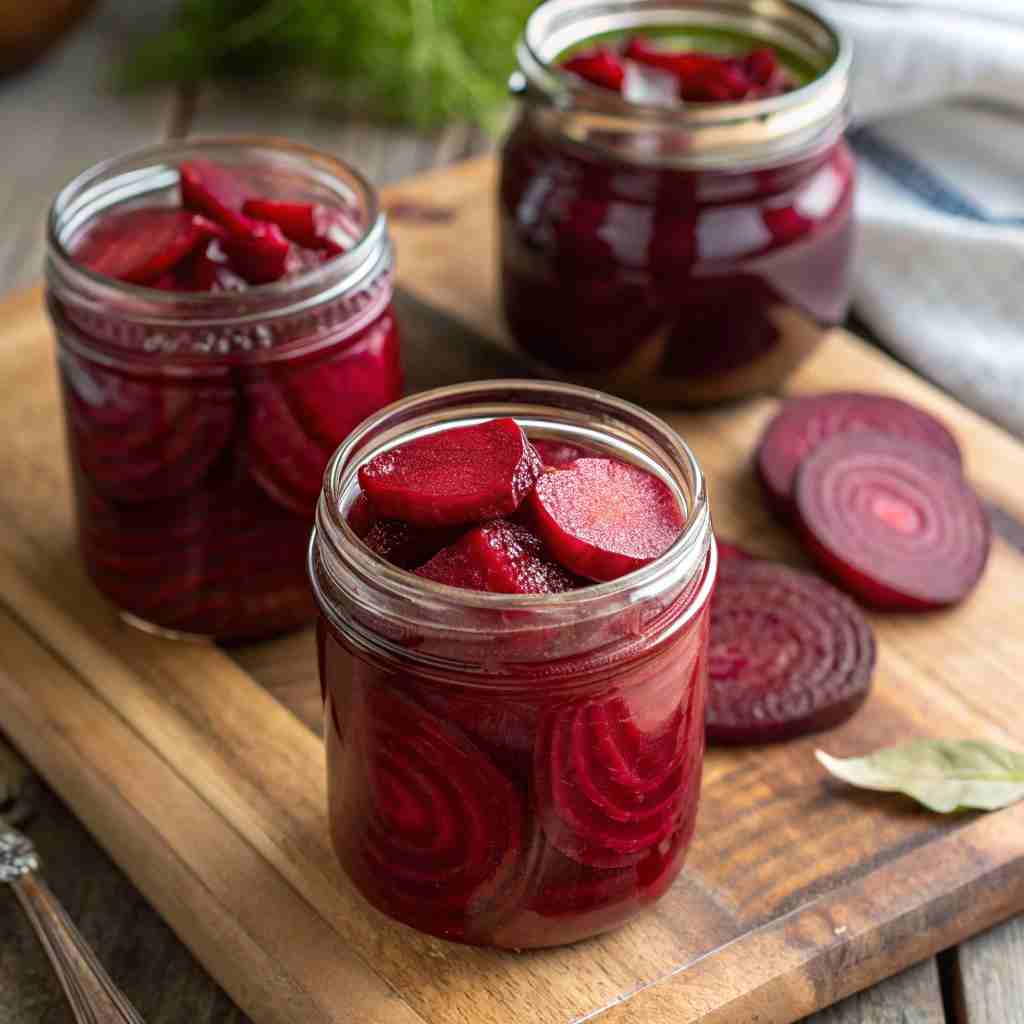
This Canning Pickled Beets recipe is a true gem for several reasons.
- Vibrant Flavor and Color: The combination of sweet and tangy flavors, along with the beautiful ruby-red color of the beets, makes this recipe visually appealing and incredibly delicious. The pickling spices add depth and warmth, making each bite an explosion of flavor.
- Cost-Effective: Making pickled beets at home is significantly cheaper than buying them pre-made from the store. You can control the quality of ingredients and customize the recipe to your liking, all while saving money.
- Homemade Goodness: This recipe allows you to create a pantry staple that is free from artificial preservatives and additives. You can enjoy the satisfaction of knowing exactly what went into your pickled beets and share the homemade goodness with family and friends.
If you’re looking for another way to preserve garden vegetables, be sure to check out our [Canning Green Beans] recipe for a savory alternative. Get ready to enjoy the vibrant flavors of summer all year long with this incredible Canning Pickled Beets recipe! Grab your beets and let’s get canning!
What to Serve Canning Pickled Beets With:
Pickled Beets are a versatile condiment that can complement a wide range of dishes. Here are a few serving suggestions:
- Salads: Add sliced or diced pickled beets to green salads for a burst of color, flavor, and texture. They pair particularly well with goat cheese, walnuts, and a balsamic vinaigrette.
- Sandwiches: Use pickled beets as a tangy and crunchy topping for sandwiches, especially those with roasted meats or creamy cheeses.
- Charcuterie Boards: Include pickled beets on a charcuterie board for a sweet and savory addition. They pair well with cheeses, crackers, and cured meats.
- Roasted Meats: Serve pickled beets alongside roasted meats such as pork, chicken, or beef for a complementary flavor profile.
- Eggs: Top scrambled or fried eggs with pickled beets for a unique and flavorful breakfast or brunch dish.
Top Tips for Perfecting Canning Pickled Beets:
- Use Uniform Sized Beets: Choose beets that are roughly the same size to ensure even cooking.
- Don’t Skip the Pickling Salt: Use pickling salt instead of iodized table salt, as the iodine in table salt can cause the brine to cloud.
- Leave Headspace: Accurate headspace is vital for a proper seal.
- Adjust Brine to Taste: Adjust the amount of sugar in the brine to suit your personal preference.
- Ensure Proper Sealing: Always check the seals of the jars after processing to ensure that they are properly sealed.
Health Benefits of Canning Pickled Beets:
Pickled beets are not only delicious but also offer several health benefits. Beets are a good source of fiber, which can help with digestion and promote gut health. They are also rich in vitamins and minerals, including folate, potassium, and vitamin C. Additionally, beets contain compounds called betalains, which have antioxidant and anti-inflammatory properties.
The vinegar used in pickling may also have some health benefits, such as helping to regulate blood sugar levels. However, it’s important to note that pickled beets can be high in sugar and sodium, so they should be consumed in moderation.
Storing and Reheating Tips:
Storing: Properly canned Pickled Beets stored in a cool, dark, and dry place can last for up to 1-2 years. Once opened, refrigerate any leftover Pickled Beets in an airtight container and consume within 2-3 weeks.
Reheating: Pickled Beets are typically served cold or at room temperature, so reheating is not necessary. If you prefer them warm, you can gently heat them in a saucepan over low heat or microwave them for a short period. Be careful not to overheat them, as this can affect their texture and flavor.
Final Thoughs:
Canning Pickled Beets is a rewarding way to preserve the flavors of the harvest and create a delicious and versatile condiment that you can enjoy year-round. With just a few simple ingredients and steps, you can transform garden-fresh beets into jars of tangy, vibrant goodness. This recipe is not only easy to follow but also allows you to customize the flavors to your liking. Ready to give it a try?
Read more :
- Canning Corn on the Cob
- Canning Vegetable Soup
- Pickled Mixed Vegetables (Giardiniera)
- Canning Vegetable Stock
- Pressure Canning Green Beans
- our Pinterest
Canning Pickled Beets FAQs:
Q: Is it safe to skip the boiling water bath?
A: No, the boiling water bath is crucial for ensuring the safety of the pickled beets. It destroys any harmful bacteria and creates a vacuum seal that prevents spoilage.
Q: Can I use a different type of vinegar?
A: While you can experiment with other types of vinegar, such as apple cider vinegar, it’s important to ensure that the vinegar has a minimum acidity of 5% for safe canning. White vinegar is the most common and reliable choice.
Q: My pickled beets turned brown. What happened?
A: Browning can occur if the beets were not cooked quickly enough or if they were exposed to air for too long. To prevent browning, cook the beets as soon as possible after harvesting and keep them submerged in water or brine during preparation.