
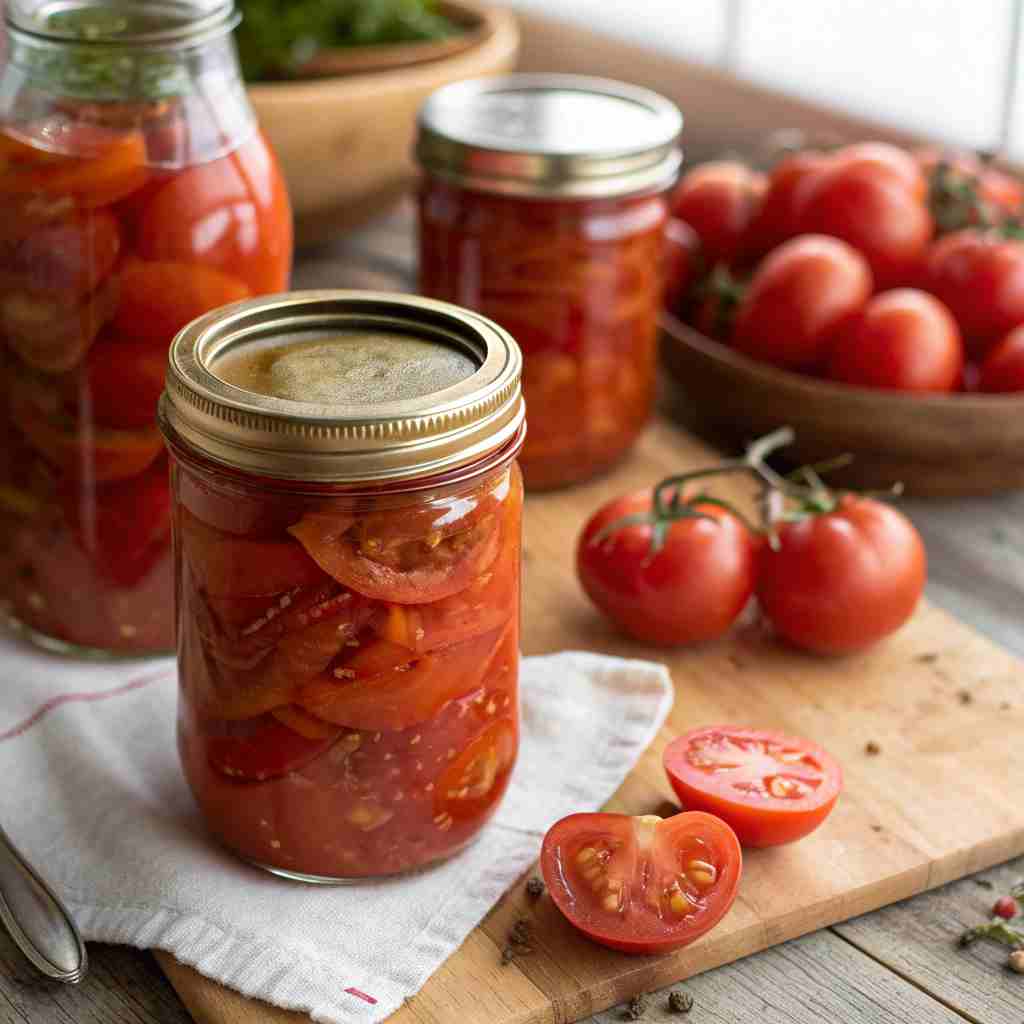
Canning Tomatoes is one of the easiest and most rewarding ways to preserve the fresh, vibrant taste of summer tomatoes for use all year long. This simple water bath canning method locks in flavor and nutrients while ensuring safe, shelf-stable jars that last up to 18 months. Using just ripe tomatoes, bottled lemon juice, and optional seasonings, you can create a pantry staple perfect for sauces, soups, stews, and salsas.
Whether you’re new to canning or an experienced home preserver, this homemade tomato canning recipe captures the essence of freshly picked produce—ready whenever your favorite dishes call for it.
Table of Contents
What is Canning Tomatoes?
Canning tomatoes is a method of preserving fresh tomatoes by sealing them in jars and then processing the jars with heat to kill any harmful bacteria and create a vacuum seal. This allows you to store the tomatoes at room temperature for extended periods, typically up to 18 months. It’s a fantastic way to enjoy the taste of summer tomatoes throughout the year and reduce food waste.
Home-canned tomatoes can be used in countless recipes, from pasta sauces and soups to stews and salsas. If you’re looking for a fulfilling and delicious way to preserve your harvest, then give canning tomatoes a try!
Key Ingredients for Canning Tomatoes:
Tomatoes: (Approximately 2-3 pounds per quart jar) Use ripe, firm tomatoes free from blemishes. Roma, San Marzano, or other paste-type tomatoes are excellent choices due to their lower water content.
Bottled Lemon Juice or Citric Acid: (2 tablespoons per quart jar or 1 tablespoon per pint jar) This is crucial for acidity. Tomatoes are naturally low in acid, so adding lemon juice or citric acid ensures they’re safe for water bath canning. Do not substitute with fresh lemon juice as the acidity level is inconsistent.
Salt: (Optional, 1/2 teaspoon per quart jar or 1/4 teaspoon per pint jar) Salt is for flavor enhancement only and is not required for preserving.
Sugar: (Optional, to taste) A small amount of sugar can help balance acidity, especially with slightly acidic tomatoes.
How to Make Canning Tomatoes:
This recipe is simple, satisfying, and perfect for beginners. The process is straightforward, ensuring that even newcomers to canning can successfully preserve their tomato harvest. The preparation time is approximately 30 minutes, followed by about an hour for the canning process, giving you delicious, shelf-stable tomatoes ready for your favorite recipes.
- Preparation TIme: 30 minutes
- Processing Time: 60 minutes
Step-by-Step Instructions:
- Prepare Jars and Lids: Wash canning jars, lids, and rings in hot, soapy water. Rinse well. Sterilize the jars by either boiling them in a large pot of water for 10 minutes, or running them through the sanitize cycle in your dishwasher. Keep jars hot until ready to fill. Heat the lids in a small saucepan of simmering water; do not boil. Keep rings clean and dry.
- Prepare Tomatoes: Wash the tomatoes thoroughly. Remove the cores and any blemishes. You can either leave the tomatoes whole, quarter them, or crush them depending on your preference. For easier peeling, you can blanch whole tomatoes by dipping them in boiling water for 30-60 seconds and then immediately plunging them into ice water. The skins should slip off easily.
- Add Acidity to Jars: Add 2 tablespoons of bottled lemon juice or 1/2 teaspoon of citric acid to each quart jar (or 1 tablespoon lemon juice or 1/4 teaspoon citric acid per pint jar). This step is essential for safe preservation.
- Fill Jars: Pack the tomatoes into the sterilized jars, leaving 1/2-inch of headspace (the space between the top of the tomatoes and the rim of the jar). If using salt and sugar, add them to the jars now, before filling with tomatoes. You can press the tomatoes lightly to release their juices.
Remove Air Bubbles: Use a non-metallic spatula or air bubble tool to gently release any trapped air bubbles inside the jar. Run the tool around the inside of the jar.
Adjust Headspace: If needed, add more tomatoes to maintain the 1/2-inch headspace. Wipe the jar rims clean with a damp cloth.
Place Lids and Rings: Center a lid on each jar, ensuring it sits flat. Screw on the band until it is fingertip tight (not too tight, not too loose).
Process in Water Bath Canner: Place the jars in a water bath canner fitted with a rack. Add enough hot water to the canner to cover the jars by at least 1 inch. Bring the water to a rolling boil.
Process for the Correct Time: Process quart jars for 85 minutes and pint jars for 85 minutes. Adjust processing time for altitude according to the following:
- 1,001 – 3,000 feet: Add 5 minutes
- 3,001 – 6,000 feet: Add 10 minutes
- 6,001 – 8,000 feet: Add 15 minutes
- 8,001 – 10,000 feet: Add 20 minutes
Cool Jars: Turn off the heat and remove the canner lid. Let the jars sit in the hot water for 5 minutes before carefully removing them with a jar lifter and placing them on a towel-lined surface to cool completely.
Check Seals: After the jars have cooled completely (usually 12-24 hours), check the seals. The lids should be concave and not flex when pressed in the center. If a jar did not seal, you can reprocess it with a new lid within 24 hours, or store it in the refrigerator and use within a week.
Store: Remove the rings from the sealed jars (this helps prevent rust), label with the date, and store in a cool, dark, dry place for up to 18 months.
Why You’ll Love This Canning Tomatoes
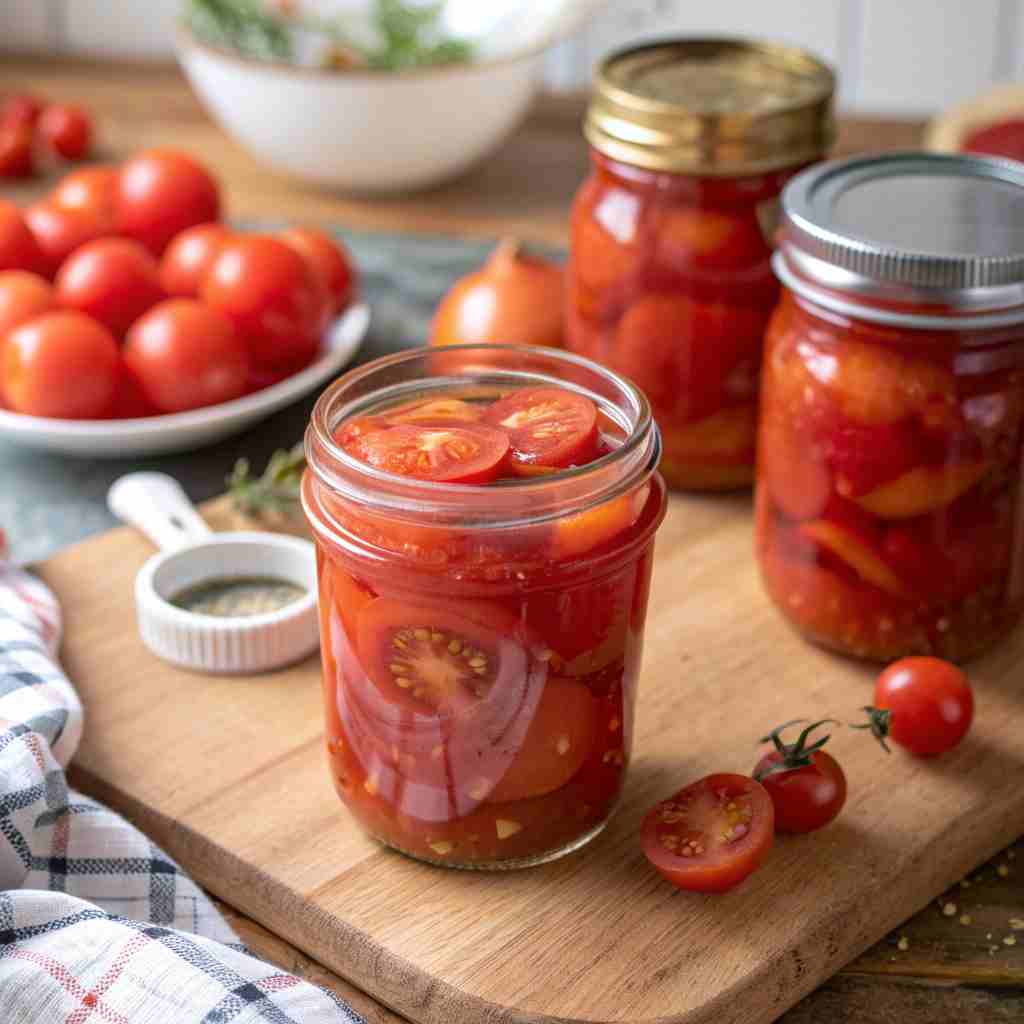
Canning your own tomatoes is incredibly rewarding. You get the vibrant taste of fresh summer tomatoes all year round! The best part is controlling the ingredients – no preservatives, just pure tomatoes and a touch of seasonings. If you buy tomatoes in the store, this recipe provides significant cost savings compared to store-bought canned tomatoes, that will quickly add up and is perfect for stocking your pantry! The possibilities are endless when you have jars of delicious, homemade tomatoes.
This recipe is a winner due to its convenience, cost-effectiveness, and the ability to customize flavors to your preference; for example, you can simmer in a variety of different seasoning. The other related recipe would be canning tomato sauce, where this recipe can be considered a ingredient for making tomato sauce. So you should absolutely give it a try!
What to Serve Canning Tomatoes With:
Canned tomatoes are incredibly versatile! Use them as a base for pasta sauces, chili, stews, and soups. They’re also perfect for making salsa, pizza sauce, or even bruschetta topping.
For a simple meal, serve them with garlic bread, rustic artisan bread, or alongside grilled chicken or fish. A hearty tomato soup served with a grilled cheese sandwich is another classic pairing.
Top Tips for Perfecting Canning Tomatoes:
- Tomato Selection is Key: Choose ripe, firm tomatoes that are free of blemishes. Paste-type tomatoes like Roma or San Marzano are ideal because they have less water content, which reduces the processing time and results in a thicker sauce.
- Don’t Skip the Acidity: Always add the recommended amount of bottled lemon juice or citric acid. This is crucial for safety and prevents botulism. Never substitute fresh lemon juice.
- Use Proper Canning Equipment: Invest in a water bath canner with a rack, jar lifter, and other canning tools. These will make the process much easier and safer.
- Watch the Headspace: Always leave the correct amount of headspace (1/2 inch) in the jars. Too little headspace can cause the jars to not seal properly, while too much can cause the food to spoil.
- Adjust for Altitude: If you live at a high altitude, you need to adjust the processing time. Refer to the altitude adjustment chart provided earlier in the recipe.
- Cool Completely Before Checking Seals: Let the jars cool completely (12-24 hours) before checking the seals. Avoid disturbing the jars during this time.
- Reprocess Unsealed Jars: If a jar doesn’t seal, you can reprocess it within 24 hours using a new lid. Alternatively, you can store the unsealed jar in the refrigerator and use the tomatoes within a week.
- Experiment with Flavors: Don’t be afraid to experiment with adding herbs, spices, or vegetables to your canned tomatoes. Just make sure to follow tested recipes for added ingredients to ensure safety.
Health Benefits of Canning Tomatoes:
Canned tomatoes retain many of the health benefits of fresh tomatoes, making them a nutritious addition to your pantry. Tomatoes are an excellent source of vitamins A and C, which are important for immune function and vision. They are also rich in antioxidants, particularly lycopene, which has been linked to a reduced risk of certain cancers and heart disease. While the canning process might slightly reduce some nutrients, the convenience and affordability of canned tomatoes make them a valuable and healthy food source.
Furthermore, canning allows you to enjoy tomatoes year-round, even when they’re not in season locally, ensuring you always have access to these essential nutrients. Making them at home reduces the risk of added sugars, salt, or preservatives in store-bought versions, providing control over your ingredients and ensuring a healthier option for your family.
Storing and Reheating Tips:
Storing: Once the jars are completely cooled and you’ve confirmed that they’ve sealed properly, remove the rings (to prevent rusting) and clean the outside of the jars. Label each jar with the date and contents. Store the jars in a cool, dark, and dry place, such as a pantry or basement. Properly canned tomatoes can be stored for up to 18 months.
Reheating: If a jar doesn’t seal then store in fridge. Refrigerated canned tomatoes should be used within 1 weeks. Canned tomatoes do not benefit from freezing as canning it at water bath temperature already preserves it for a much longer time. To reheat, simply open a jar and use the tomatoes directly in your recipe. There’s no need to preheat them, unless your recipe specifically calls for it. Any unused portion from an opened jar should be stored in an airtight container in the refrigerator and used within a few days.
Final Thoughts:
Canning tomatoes at home is a rewarding and practical way to preserve the taste of summer. While it might seem intimidating at first, following this guide and prioritizing safety will ensure a successful and delicious outcome.
From choosing the right tomatoes to understanding the importance of acidity and proper processing times, this comprehensive guide equips you with the knowledge and confidence to fill your pantry with jars of flavorful, homemade tomatoes. Enjoy the satisfaction of knowing exactly what goes into your food and the delicious taste of garden-fresh tomatoes all year round!
Read more :
- Canning Corn on the Cob
- Canning Vegetable Soup
- Pickled Mixed Vegetables (Giardiniera)
- Canning Vegetable Stock
- Pressure Canning Green Beans
- our Pinterest
Canning Tomatoes FAQs:
Q: Can I use any type of tomato for canning?
A: While you can technically use any type of tomato, paste-type tomatoes like Roma or San Marzano are preferred due to their lower water content. This results in a thicker sauce and reduces the processing time.
Q: Is it necessary to add lemon juice or citric acid?
A: Yes! Adding lemon juice or citric acid is crucial for safety. Tomatoes are naturally low in acid, and adding an acidifier ensures that the pH level is low enough to prevent the growth of botulism bacteria.
Q: Can I use fresh lemon juice instead of bottled lemon juice?
A: No, do not use fresh lemon juice. Bottled lemon juice has a consistent acidity level, which is essential for safe canning. The acidity of fresh lemons can vary, making it unreliable for this purpose.
Q: How do I know if a jar has sealed properly?
A: After the jars have cooled completely, the lids should be concave and not flex when pressed in the center. If the lid pops up and down, the jar hasn’t sealed properly.
Q: What do I do if a jar doesn’t seal?
A: If a jar doesn’t seal, you can reprocess it with a new lid within 24 hours. Alternatively, you can store the unsealed jar in the refrigerator and use the tomatoes within a week.
Q: Can I add herbs and spices to my canned tomatoes?
A: Yes, you can add herbs and spices, but it’s important to follow tested recipes for added ingredients. Adding too much of certain ingredients can affect the acidity and safety of the canned product.
Q: How long can I store canned tomatoes?
A: Properly canned tomatoes can be stored in a cool, dark, and dry place for up to 18 months. It’s best to use them within this timeframe for optimal flavor and quality.
Q: Do I need to refrigerate canned tomatoes after opening?
A: Yes, once you open a jar of canned tomatoes, any unused portion should be stored in an airtight container in the refrigerator and used within a few days.