
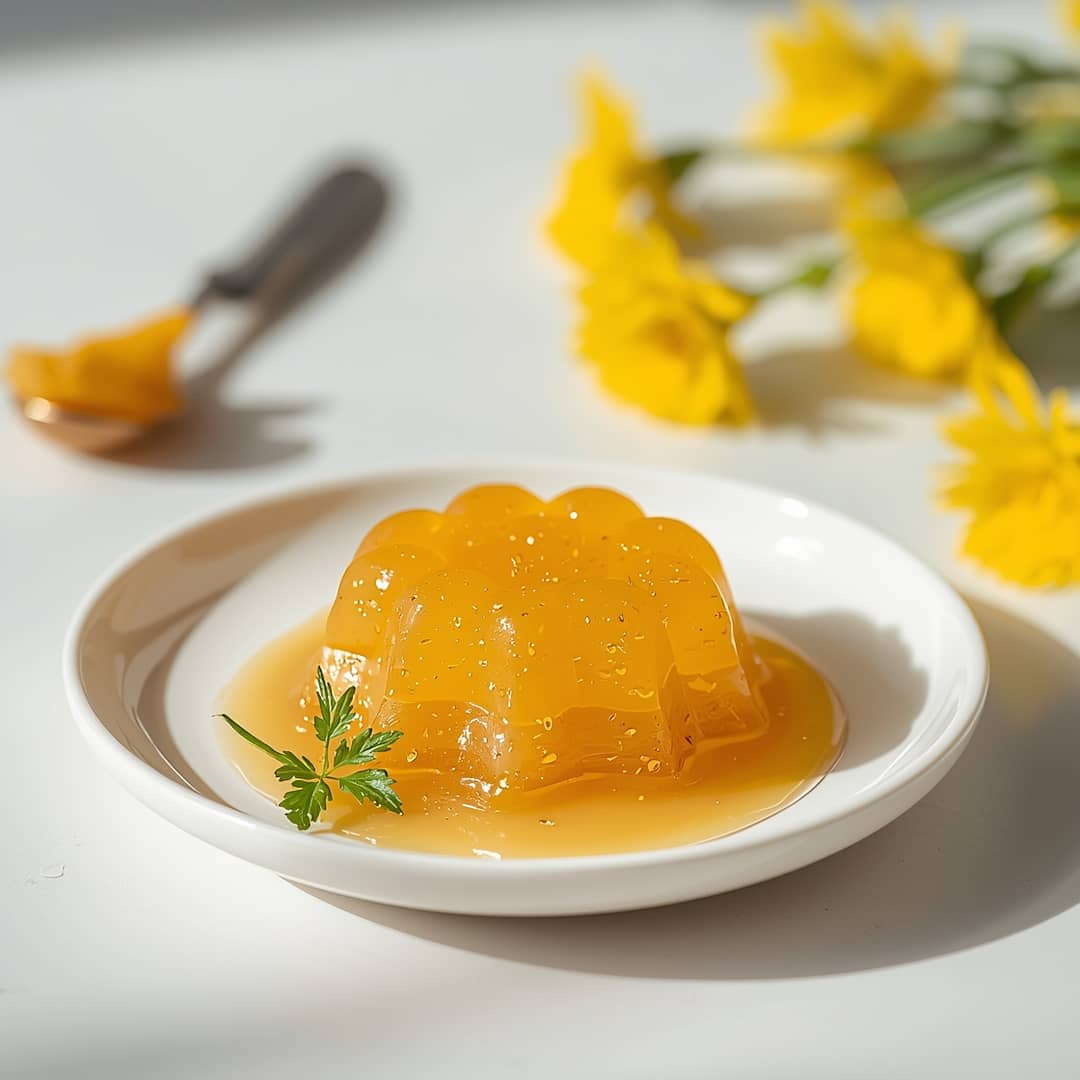
Foraged Forsythia Dandelion Jelly offers a delightful and surprisingly simple way to capture the fleeting flavors of spring, turning humble wildflowers into a beautiful, golden treat perfect for toast, tea, or as a unique glaze. This recipe is incredibly beneficial for anyone looking to add a touch of homemade charm and a burst of natural sweetness to their pantry.
Key Ingredients for Foraged Forsythia Dandelion Jelly
- Dandelion Flowers: 4 cups, freshly picked (only the yellow petals, stamens removed)
- Forsythia Blossoms: 1 cup, freshly picked (just the yellow petals, free from any green parts)
- Water: 4 cups
- Lemon: 1 large, juiced (about 1/4 cup)
- Pectin: 1 box (1.75 oz, powdered)
- Granulated Sugar: 3 cups (adjust to taste, but this is typically needed for proper setting)
How to Make Foraged Forsythia Dandelion Jelly
This Foraged Forsythia Dandelion Jelly is an absolute joy to make, delivering a vibrant, naturally sweet spread with a delicate floral aroma. The process is surprisingly straightforward, allowing you to transform foraged ingredients into a delicious pantry staple in under an hour of active prep time. Its bright, sunshine-yellow hue and unique flavor profile are truly satisfying. Preparation time is approximately 45 minutes.
Step-by-Step Instructions
- Prepare the Flowers: Gently rinse the collected dandelion petals and forsythia petals under cool water to remove any debris. Ensure you have only the bright yellow petals and have meticulously removed all green parts and stamens from the dandelions, as these can impart bitterness.
- Infuse the Flavors: In a large, non-reactive saucepan, combine the prepared dandelion petals, forsythia petals, and 4 cups of water. Bring the mixture to a boil over medium-high heat, then reduce the heat to low, cover, and simmer for 20 minutes. This allows the floral essences to infuse into the water.
- Strain the Liquid: Carefully strain the liquid through a fine-mesh sieve lined with cheesecloth into a clean bowl. Gently press the petals to extract as much liquid as possible, but avoid squeezing too hard, which can make the jelly cloudy. Discard the used petals. You should have approximately 4 cups of fragrant floral liquid.
- Combine with Lemon and Sugar: Return the strained floral liquid to the clean saucepan. Add the fresh lemon juice and bring the mixture back to a rolling boil over high heat, stirring constantly.
- Add Pectin: In a small bowl, whisk together the powdered pectin with about 1/4 cup of the hot liquid from the saucepan until smooth. This helps prevent lumps. Pour the pectin mixture into the boiling liquid and stir continuously.
- Boil and Set: Continue to boil rapidly, stirring constantly, for 1 minute.
- Add Sugar: Gradually add the granulated sugar, stirring until completely dissolved. Bring the mixture back to a full rolling boil, stirring constantly. Boil hard for exactly 1 minute, stirring occasionally.
- Test for Set: To test if the jelly has reached the setting point, remove the saucepan from the heat. Spoon a small amount of the jelly onto a chilled plate. If it wrinkles when pushed with your finger, it’s ready. If not, return to a boil for another minute and test again.
- Skim and Jar: While the jelly is still hot, skim off any foam that has risen to the surface with a spoon. Carefully ladle the hot jelly into sterilized jars, leaving about 1/4 inch of headspace.
- Seal the Jars: Wipe the rims of the jars clean with a damp cloth, then place the sterilized lids on top and screw on the bands until fingertip tight.
- Process (Optional but Recommended for Shelf Stability): For long-term shelf storage, process the jars in a boiling water bath for 10 minutes (adjusting for altitude if necessary). Carefully remove the jars from the water bath and let them cool undisturbed on a towel-lined surface for 12-24 hours. You should hear a “ping” as the lids seal.
Why You’ll Love This Foraged Forsythia Dandelion Jelly
You’ll adore this Foraged Forsythia Dandelion Jelly for its exquisite, sun-kissed flavor and the sheer delight of creating something so special from nature’s bounty. Its vibrant golden hue and delicate floral notes are a refreshing departure from typical fruit jellies, offering a unique taste reminiscent of springtime itself. Unlike store-bought options laden with artificial flavors, this jelly boasts an authentic, homemade taste that’s both sophisticated and grounding.
The cost-saving aspect of this recipe is also a significant draw; by simply foraging, you bypass the expense of traditional produce, making this gourmet spread incredibly budget-friendly. Imagine serving this alongside a simple cheese board or as a surprise glaze on roasted chicken – flavors that elevate everyday meals without breaking the bank. Ready to experience a taste of pure spring sunshine? Give this delightful Foraged Forsythia Dandelion Jelly a try in your own kitchen!
Storing and Reheating Tips
Foraged Forsythia Dandelion Jelly made using proper sterilization and water bath processing will store beautifully in a cool, dark pantry for up to a year. Always ensure the lids have sealed properly by checking for a concave surface and no give when pressed.
- Refrigeration: Once opened, the jelly must be refrigerated. It will remain fresh and delicious for at least 3-4 weeks when stored in a sealed jar in the refrigerator.
- Freezing: While not typically recommended for jellies as it can affect texture, if you wish to freeze, transfer the jelly to freezer-safe containers, leaving ample headspace for expansion, and freeze for up to 3 months. Thaw overnight in the refrigerator before consuming.
Final Thoughts
This Foraged Forsythia Dandelion Jelly is a truly special treat that brings the magic of spring into your kitchen. Don’t hesitate to gather these beautiful wildflowers and create this golden sunshine in a jar for yourself.
Foraged Forsythia Dandelion Jelly
Ingredients
Equipment
Method
- Gently rinse the collected dandelion petals and forsythia petals under cool water to remove any debris. Ensure you have only the bright yellow petals and have meticulously removed all green parts and stamens from the dandelions, as these can impart bitterness.4 cups Dandelion Flowers (yellow petals, stamens removed), 1 cup Forsythia Blossoms (yellow petals only)
- In a large, non-reactive saucepan, combine the prepared dandelion petals, forsythia petals, and 4 cups of water. Bring the mixture to a boil over medium-high heat, then reduce the heat to low, cover, and simmer for 20 minutes. This allows the floral essences to infuse into the water.4 cups Dandelion Flowers (yellow petals, stamens removed), 1 cup Forsythia Blossoms (yellow petals only), 4 cups Water
- Carefully strain the liquid through a fine-mesh sieve lined with cheesecloth into a clean bowl. Gently press the petals to extract as much liquid as possible, but avoid squeezing too hard, which can make the jelly cloudy. Discard the used petals. You should have approximately 4 cups of fragrant floral liquid.
- Return the strained floral liquid to the clean saucepan. Add the fresh lemon juice and bring the mixture back to a rolling boil over high heat, stirring constantly.1 large Lemon
- In a small bowl, whisk together the powdered pectin with about 1/4 cup of the hot liquid from the saucepan until smooth. This helps prevent lumps. Pour the pectin mixture into the boiling liquid and stir continuously.1 box Powdered Pectin
- Continue to boil rapidly, stirring constantly, for 1 minute.
- Gradually add the granulated sugar, stirring until completely dissolved. Bring the mixture back to a full rolling boil, stirring constantly. Boil hard for exactly 1 minute, stirring occasionally.3 cups Granulated Sugar
- To test if the jelly has reached the setting point, remove the saucepan from the heat. Spoon a small amount of the jelly onto a chilled plate. If it wrinkles when pushed with your finger, it’s ready. If not, return to a boil for another minute and test again.
- While the jelly is still hot, skim off any foam that has risen to the surface with a spoon. Carefully ladle the hot jelly into sterilized jars, leaving about 1/4 inch of headspace.
- Wipe the rims of the jars clean with a damp cloth, then place the sterilized lids on top and screw on the bands until fingertip tight.
- For long-term shelf storage, process the jars in a boiling water bath for 10 minutes (adjusting for altitude if necessary). Carefully remove the jars from the water bath and let them cool undisturbed on a towel-lined surface for 12-24 hours. You should hear a ‘ping’ as the lids seal.