
Discover the ultimate guide to Pressure Canned Chicken Soup, transforming a comforting classic into a ready-to-eat meal for any occasion. This essential technique allows you to preserve delicious, homemade chicken soup, ensuring a nutritious and satisfying option is always on hand.
Key Ingredients for Pressure Canned Chicken Soup
- 1.5 kg boneless, skinless chicken thighs or breasts, cut into bite-sized pieces
- 3 liters chicken broth (low sodium preferred)
- 500g carrots, peeled and diced
- 500g celery stalks, diced
- 300g yellow onion, diced
- 200g egg noodles or other desired pasta (optional, for adding after opening)
- 2 tablespoons fresh parsley, chopped
- 1 tablespoon fresh thyme leaves
- 1 teaspoon salt (or to taste)
- 1/2 teaspoon black pepper (or to taste)
- Lemon juice or citric acid (for acidification, as per canning guidelines)
How to Make Pressure Canned Chicken Soup
This pressure canned chicken soup recipe is a true pantry hero, offering unparalleled convenience without sacrificing flavor. The simple steps yield a rich, hearty soup bursting with tender chicken and wholesome vegetables, perfect for a quick lunch or comforting dinner. With a hands-on preparation time of approximately 30 minutes and cooking time of about 1.5 hours for the canning process itself, you’ll have a collection of delicious, ready-to-go meals.
Step-by-Step Instructions
- Prepare the Chicken: In a large pot or Dutch oven, add the cut chicken pieces. Cover with water and bring to a boil over medium-high heat. Skim off any foam that rises to the surface. Reduce heat and simmer for 15-20 minutes, or until the chicken is cooked through. Remove the chicken from the pot, reserving the cooking liquid. Shred or dice the chicken into desired sizes.
- Sauté the Vegetables: In the same pot (or a clean one if preferred), add a splash of oil (if desired, or use a small amount of the reserved chicken cooking liquid). Add the diced carrots, celery, and onion. Sauté over medium heat for 5-7 minutes, until the vegetables begin to soften slightly.
- Combine and Simmer: Add the shredded or diced chicken back into the pot with the sautéed vegetables. Pour in the chicken broth and the reserved chicken cooking liquid. Stir in the chopped parsley, thyme leaves, salt, and pepper. Bring the soup to a gentle simmer.
- Prepare Jars and Lids: Thoroughly wash all your canning jars, lids, and screw bands in hot, soapy water. Rinse well and keep the jars hot until ready to fill. Prepare the lids according to the manufacturer’s instructions.
- Acidify the Soup: For safe pressure canning, it’s crucial to acidify the soup to prevent the growth of botulism. Add 1 tablespoon of lemon juice or 1/4 teaspoon of citric acid per pint jar, or 2 tablespoons of lemon juice or 1/2 teaspoon of citric acid per quart jar, directly into each empty jar before filling.
- Fill the Jars: Ladle the hot soup into the prepared jars, leaving a 1-inch headspace. Ensure there is enough liquid to cover the solids. Remove any air bubbles by running a non-metallic spatula or bubble remover tool around the inside of the jar. Adjust liquid if necessary to maintain the 1-inch headspace.
- Wipe Rims and Secure Lids: Carefully wipe the rims of the jars with a clean, damp cloth to remove any food residue. Place the flat lids on the jars and screw on the bands fingertip tight. Do not overtighten.
- Prepare the Pressure Canner: Fill your pressure canner with the amount of water specified in the canner’s manual. Place the filled jars onto the rack in the pressure canner. Ensure the jars do not touch each other.
- Process the Soup: Secure the lid of your pressure canner according to the manufacturer’s instructions. Vent the canner for 10 minutes once steam begins to escape steadily. After venting, close the vent and bring the canner up to the required pressure for your altitude and jar size (typically 10-15 psi for weighted-gauge canners, or 11-13 psi for dial-gauge canners for pints, and 13 psi for both for quarts). Process for the recommended time (90 minutes for pints, 100 minutes for quarts).
- Cool and Check Seals: Once the processing time is complete, turn off the heat and allow the pressure to return to zero naturally. Do not rush this process. Carefully remove the canner lid (away from your face) and let the jars sit in the canner for another 5 minutes before removing them with a jar lifter. Place the jars on a towel-lined counter or cooling rack, leaving space between them, and let them cool undisturbed for 12-24 hours. Check for seals by pressing the center of each lid. If it doesn’t flex up and down, the jar is sealed.
Why You’ll Love This Pressure Canned Chicken Soup
You’ll absolutely fall in love with this chicken soup pressure canning method because it transforms a beloved comfort food into an incredibly convenient and budget-friendly staple. Imagine having a steaming bowl of flavorful, tender chicken soup ready in minutes, perfect for those busy weeknights or a quick, nourishing lunch, all without a fuss. This homemade goodness beats any store-bought can any day, offering superior taste and quality that will have you coming back for more.
The sheer satisfaction of knowing you’ve preserved such a wholesome and delicious meal yourself is unmatched. It’s a fantastic way to save money on groceries, especially when chicken and vegetables are in season or on sale. Think of the incredible aroma and the hearty texture, far richer and more satisfying than its condensed counterparts. This pressure-canned chicken soup is not just a meal; it’s a testament to your culinary prowess and a delicious, time-saving investment. Why not give yourself the gift of effortless, homemade comfort and try this chicken soup pressure canning technique today!
Storing and Reheating Tips
Proper storage is key to enjoying your safely canned chicken soup for months to come.
- Storage: Once jars have cooled and sealed completely, remove the screw bands (this prevents rust and allows you to easily spot a failed seal). Wipe the jars clean and store them in a cool, dark, dry place like a pantry or basement. Properly canned chicken soup can last for 12-18 months, maintaining optimal quality.
- Reheating: To reheat, simply open a jar of your pressure-canned chicken soup. If you wish to add fresh elements like noodles, extra vegetables, or herbs, do so now. Pour the soup into a saucepan and heat gently over medium-low heat until thoroughly warmed through. Avoid boiling the soup aggressively, as this can diminish its texture. Alternatively, you can microwave the soup in a microwave-safe bowl, stirring occasionally, until heated.
Final Thoughts
Embracing chicken soup pressure canning offers the incredible reward of readily available, home-cooked comfort. This method is a game-changer for busy kitchens, ensuring that a nourishing and delicious meal is always within reach. Give this process a try and experience the convenience and satisfaction of your own preserved, hearty chicken soup.
Read more :
- Canning Corn on the Cob
- Canning Vegetable Soup
- Pickled Mixed Vegetables (Giardiniera)
- Canning Vegetable Stock
- Pressure Canning Green Beans
- our Pinterest
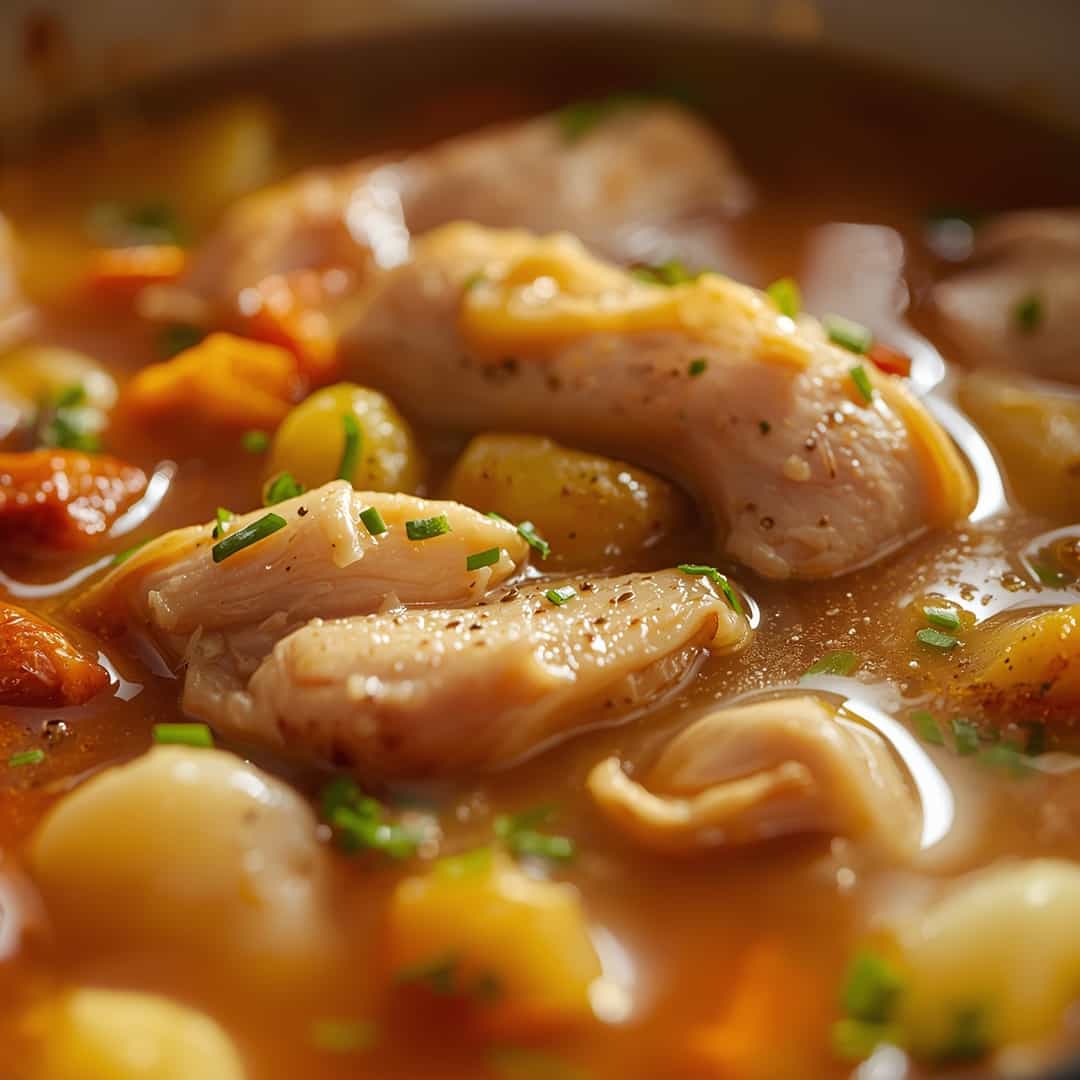
Pressure Canned Chicken Soup
Ingredients
Equipment
Method
- In a large pot or Dutch oven, add the cut chicken pieces. Cover with water and bring to a boil over medium-high heat. Skim off any foam that rises to the surface. Reduce heat and simmer for 15-20 minutes, or until the chicken is cooked through. Remove the chicken from the pot, reserving the cooking liquid. Shred or dice the chicken into desired sizes.1.5 kg boneless, skinless chicken thighs or breasts, cut into bite-sized pieces
- In the same pot (or a clean one if preferred), add a splash of oil (if desired, or use a small amount of the reserved chicken cooking liquid). Add the diced carrots, celery, and onion. Sauté over medium heat for 5-7 minutes, until the vegetables begin to soften slightly.500 g carrots, peeled and diced, 500 g celery stalks, diced, 300 g yellow onion, diced, 1.5 kg boneless, skinless chicken thighs or breasts, cut into bite-sized pieces
- Add the shredded or diced chicken back into the pot with the sautéed vegetables. Pour in the chicken broth and the reserved chicken cooking liquid. Stir in the chopped parsley, thyme leaves, salt, and pepper. Bring the soup to a gentle simmer.1.5 kg boneless, skinless chicken thighs or breasts, cut into bite-sized pieces, 2 tablespoons fresh parsley, chopped, 1 tablespoon fresh thyme leaves, 1 teaspoon salt (or to taste), 1/2 teaspoon black pepper (or to taste), 3 liters chicken broth (low sodium preferred)
- Thoroughly wash all your canning jars, lids, and screw bands in hot, soapy water. Rinse well and keep the jars hot until ready to fill. Prepare the lids according to the manufacturer’s instructions.
- For safe pressure canning, it’s crucial to acidify the soup to prevent the growth of botulism. Add 1 tablespoon of lemon juice or 1/4 teaspoon of citric acid per pint jar, or 2 tablespoons of lemon juice or 1/2 teaspoon of citric acid per quart jar, directly into each empty jar before filling.Lemon juice or citric acid (for acidification, as per canning guidelines)
- Ladle the hot soup into the prepared jars, leaving a 1-inch headspace. Ensure there is enough liquid to cover the solids. Remove any air bubbles by running a non-metallic spatula or bubble remover tool around the inside of the jar. Adjust liquid if necessary to maintain the 1-inch headspace.
- Carefully wipe the rims of the jars with a clean, damp cloth to remove any food residue. Place the flat lids on the jars and screw on the bands fingertip tight. Do not overtighten.
- Fill your pressure canner with the amount of water specified in the canner’s manual. Place the filled jars onto the rack in the pressure canner. Ensure the jars do not touch each other.
- Secure the lid of your pressure canner according to the manufacturer’s instructions. Vent the canner for 10 minutes once steam begins to escape steadily. After venting, close the vent and bring the canner up to the required pressure for your altitude and jar size (typically 10-15 psi for weighted-gauge canners, or 11-13 psi for dial-gauge canners for pints, and 13 psi for both for quarts). Process for the recommended time (90 minutes for pints, 100 minutes for quarts).
- Once the processing time is complete, turn off the heat and allow the pressure to return to zero naturally. Do not rush this process. Carefully remove the canner lid (away from your face) and let the jars sit in the canner for another 5 minutes before removing them with a jar lifter. Place the jars on a towel-lined counter or cooling rack, leaving space between them, and let them cool undisturbed for 12-24 hours. Check for seals by pressing the center of each lid. If it doesn’t flex up and down, the jar is sealed.