
Unlock a world of convenience and flavor with our comprehensive guide to pressure canning meat. This essential skill is your key to preserving high-quality protein, ensuring you always have a wholesome and ready-to-cook meal on hand, saving you time and money while reducing food waste. Mastering pressure canning meat means delicious, home-cooked meals are just a jar away.
Key Ingredients for Pressure Canning Meat and Vegetables
- Your Choice of Meat: 2-3 pounds (e.g., beef chuck, chicken thighs, pork shoulder, lamb leg). Cut into uniform 1-inch cubes. Trim off excess fat and gristle.
- Optional Vegetables (for combination packs):
- 1 pound carrots, peeled and cut into 1-inch chunks
- 1 pound potatoes, peeled and cut into 1-inch chunks
- 1 pound peas, shelled (fresh or frozen – add to jars hot)
- 1 pound corn, kernels cut from the cob (fresh or frozen – add to jars hot)
- 1 pound green beans, trimmed and cut into 1-inch pieces
- Broth or Water: For filling jars, as needed. Low-sodium chicken broth, beef broth, or vegetable broth are ideal. Hot water can also be used.
- Salt (optional): 1/2 teaspoon per pint jar, 1 teaspoon per quart jar. Use canning salt or non-iodized salt.
- Lemon Juice or Vinegar (for some meats, check specific guidelines): While not always used for plain meat, for certain recipes or if canning acidic foods with meat, this can be crucial for safety. For plain meats, it’s typically not needed.
How to Make Pressure Canning Meat
This guide makes the process of pressure canning meat incredibly straightforward, ensuring safety and delicious results every time. You’ll find that preparing and canning your own protein is surprisingly simple, yielding tender, flavorful meat perfect for quick weeknight dinners or flavorful stews. The entire process, from preparation to the canning cycle, can take approximately 3-5 hours depending on the type and quantity of meat and your canning equipment.
Step-by-Step Instructions
Preparation is Key:
- Clean and Sanitize Equipment: Thoroughly wash all canning jars, lids, and bands in hot, soapy water. Inspect jars for any chips or cracks. Rinse and keep jars hot in a dishwasher, simmering water, or a canner preheating with water. Lids should be kept in simmering water according to manufacturer instructions (usually heating activates the sealing compound).
- Prepare the Meat: If you haven’t already, trim excess fat and gristle from your chosen meat. Cut the meat into uniform 1-inch cubes. This ensures even cooking and efficient packing into jars.
- Pre-Cook the Meat (Recommended for Best Results): While raw packing is an option for some meats, pre-cooking (browning or boiling) is highly recommended for optimal texture, flavor, and to remove some fat.
- Browning: In a skillet, brown the meat cubes in small batches over medium-high heat until browned on all sides. Do not overcrowd the pan, as this will steam the meat instead of browning it. Drain off any excess fat.
- Boiling: Place meat in a large pot and cover with water. Bring to a boil and simmer for about 30 minutes. Drain and discard the cooking liquid.
- Prepare Vegetables (if applicable): If you are canning meat with vegetables, prepare them as listed in the ingredients. For vegetables like peas and corn, it’s best to add them hot to the jars. Some vegetables, like potatoes and carrots, can be parboiled for a few minutes.
Packing the Jars:
- Hot Pack Method (Recommended): This is the safest and most effective method for canning meat.
- Add Meat and Vegetables: Ladle the hot, pre-cooked meat into your hot canning jars. If using vegetables, add them into the jars, distributing evenly. Leave about 1-inch of headspace at the top of each jar (the space between the food and the rim). For combination packs, aim for a mix of meat and vegetables.
- Add Liquid: Pour hot broth or hot water over the meat and vegetables, maintaining the 1-inch headspace.
- Add Seasoning (Optional): Add 1/2 teaspoon of salt per pint jar or 1 teaspoon per quart jar if desired.
- Remove Air Bubbles: Slide a non-metallic utensil (like a plastic spatula or coffee stirrer) around the inside edges of the jars to release any trapped air bubbles. Adjust the liquid if necessary to maintain the 1-inch headspace.
- Wipe Jar Rims: Dampen a clean cloth with hot water and wipe the rims of each jar to remove any food particles or residue. This ensures a good seal.
- Apply Lids and Bands: Center the hot lid on each jar. Screw on the bands until fingertip tight – do not overtighten, as air needs to escape during processing.
Processing in the Pressure Canner:
- Prepare the Canner: Add the recommended amount of water to your pressure canner according to the manufacturer’s instructions. If your canner requires a rack, place it in the bottom.
- Load the Canner: Carefully place the filled jars onto the rack in the canner, ensuring they are not touching each other.
- Vent the Canner: Secure the lid on the pressure canner, leaving the vent open or the weight off (depending on your model). Turn the heat to high and allow steam to escape steadily from the vent for 10 minutes. This “venting” process purges air from the canner, ensuring accurate temperature.
- Pressurize the Canner: After venting, place the weight on the vent or close the vent according to your canner’s instructions. Allow the canner to build pressure to the required level for your altitude and the type of food being canned (refer to your canner’s manual and reliable canning resources like the National Center for Home Food Preservation).
- Process the Jars: Once the canner reaches the correct pressure, begin timing the processing. For Pints of Meat: 75 minutes at 10-11 PSI (dial gauge) or 11 PSI (weighted gauge). For Quarts of Meat: 90 minutes at 10-11 PSI (dial gauge) or 11 PSI (weighted gauge). For combination packs, use the processing time for the food requiring the longest time. Adjust processing pressure based on your altitude.
- Cool Down Naturally: Once the processing time is complete, turn off the heat. Do not rush the cooling process. Allow the pressure to drop to zero naturally. Do not try to force the cooling by removing the weight or opening the vent. This can lead to siphoning and seal failures.
- Remove Jars: Once the pressure has completely returned to zero, carefully remove the weight from the vent or open the vent according to your canner’s instructions. Wait an additional 5-10 minutes before unlatching and carefully removing the canner lid, tilting it away from your face to avoid steam.
- Remove Jars from Canner: Using a jar lifter, carefully remove hot jars from the canner and place them upright on a towel-lined counter or cooling rack, leaving at least 1 inch of space between jars.
- Cool and Check Seals: Allow the jars to cool undisturbed for 12-24 hours. You may hear a “ping” as the lids seal. After cooling, check each lid. A properly sealed lid will be concave (curving slightly downward) and will not flex when pressed. Gently press the center of the lid; if it does not move or flex, it is sealed.
Why You’ll Love This Pressure Canning Meat
You’ll absolutely adore the convenience and incredible flavor of pressure canning meat right in your own kitchen. This method delivers perfectly cooked, tender meat straight from the pantry, making dinner preparation astonishingly quick – think of it as having pre-made stew meat or chili base ready at a moment’s notice! It’s a fantastic alternative to buying expensive pre-cooked meats or relying on processed meals.
Beyond the sheer ease, the cost savings are substantial. By buying meat in bulk when it’s on sale and preserving it yourself, you significantly reduce your per-serving cost. Imagine having delicious, wholesome meat accessible for your favorite recipes without frequent grocery store trips or the higher prices of convenience. Try pressure canning meat today and taste the difference homemade quality makes!
Storing and Reheating Tips
- Storage: Properly sealed jars of pressure-canned meat should be stored in a cool, dark, and dry place. A pantry, basement, or cupboard away from direct sunlight and heat sources is ideal. Ensure the storage area is between 50°F and 70°F (10°C and 21°C) for best results. Avoid storing jars where they can freeze.
- Shelf Life: When stored correctly, pressure-canned meat is safe to consume for at least one year, and often longer. The quality may begin to decline after two years, so it’s best to use it within a year for optimal flavor and texture. Always visually inspect jars before opening – discard any jars with bulging lids, leaks, or mold.
- Reheating: To reheat pressure-canned meat, simply open the jar and pour the contents into a saucepan or skillet. Heat gently over medium-low heat, stirring occasionally, until heated through. You can add a splash of broth, water, or a favorite sauce to moisten if needed. For a quick meal, you can also add heated contents directly to soups, stews, casseroles, or pasta dishes. If you’re reheating a larger portion, you can also warm it in a covered oven-safe dish in a 325°F (160°C) oven until thoroughly heated.
Final Thoughts
Mastering the art of pressure canning meat is a rewarding journey into food preservation that offers unparalleled convenience and flavor. Empower yourself with this essential skill and enjoy the peace of mind that comes with having delicious, wholesome meals ready to go at any time. Give pressure canning meat a try – your future self will thank you!
Read more :
- Canning Corn on the Cob
- Canning Vegetable Soup
- Pickled Mixed Vegetables (Giardiniera)
- Canning Vegetable Stock
- Pressure Canning Green Beans
- our Pinterest
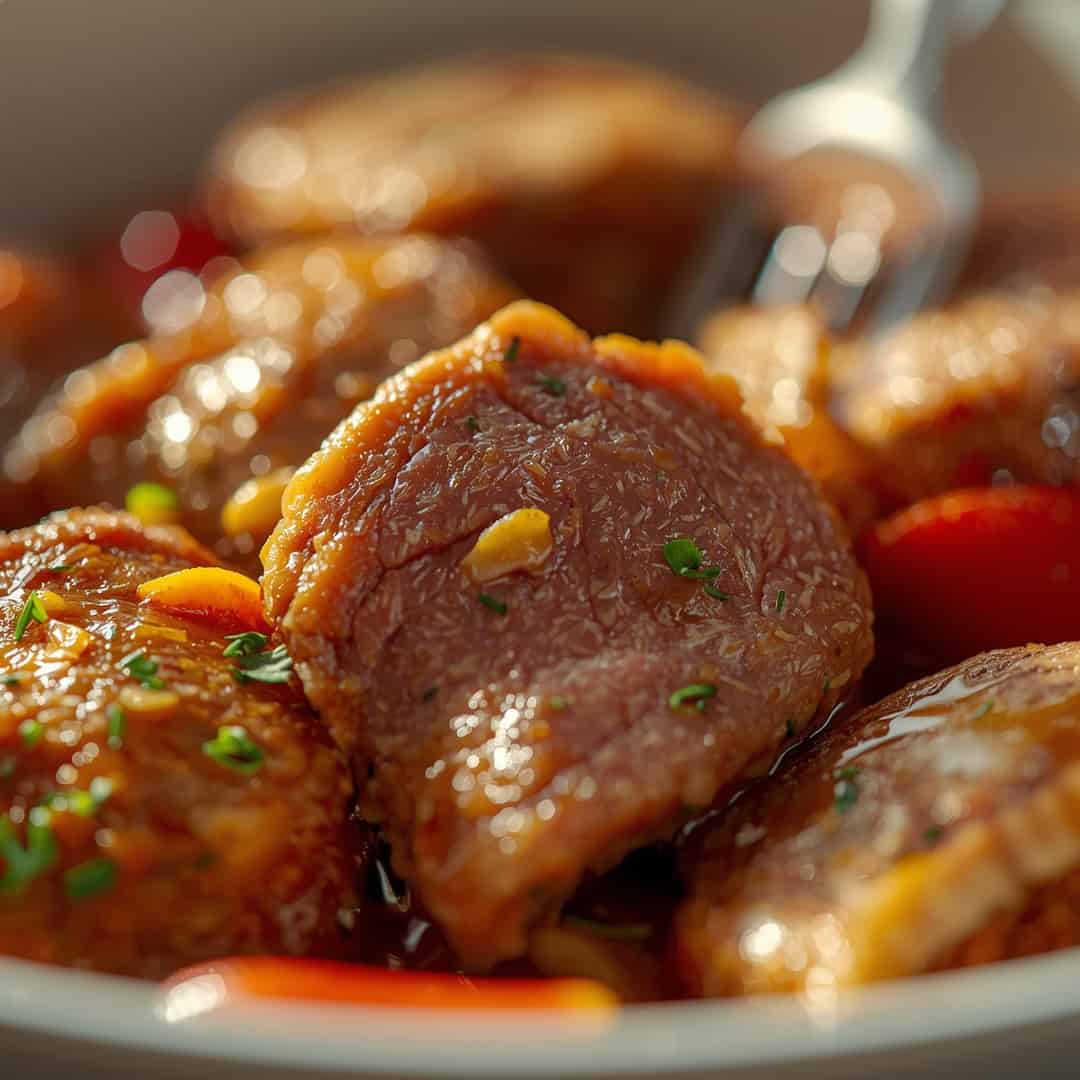
Pressure Canning Meat
Ingredients
Equipment
Method
- Thoroughly wash all canning jars, lids, and bands in hot, soapy water. Inspect jars for any chips or cracks. Rinse and keep jars hot in a dishwasher, simmering water, or a canner preheating with water. Lids should be kept in simmering water according to manufacturer instructions (usually heating activates the sealing compound).
- Trim excess fat and gristle from your chosen meat. Cut the meat into uniform 1-inch cubes. This ensures even cooking and efficient packing into jars.
- Browning: In a skillet, brown the meat cubes in small batches over medium-high heat until browned on all sides. Do not overcrowd the pan, as this will steam the meat instead of browning it. Drain off any excess fat.Boiling: Place meat in a large pot and cover with water. Bring to a boil and simmer for about 30 minutes. Drain and discard the cooking liquid.2-3 pounds Your Choice of Meat
- If you are canning meat with vegetables, prepare them as listed in the ingredients. For vegetables like peas and corn, it’s best to add them hot to the jars. Some vegetables, like potatoes and carrots, can be parboiled for a few minutes.1 pound carrots, 1 pound potatoes, 1 pound peas, 1 pound corn, 1 pound green beans
- Ladle the hot, pre-cooked meat into your hot canning jars. If using vegetables, add them into the jars, distributing evenly. Leave about 1-inch of headspace at the top of each jar (the space between the food and the rim). For combination packs, aim for a mix of meat and vegetables.2-3 pounds Your Choice of Meat
- Pour hot broth or hot water over the meat and vegetables, maintaining the 1-inch headspace.2-3 pounds Your Choice of Meat, Broth or Water
- Add 1/2 teaspoon of salt per pint jar or 1 teaspoon per quart jar if desired.Salt (optional)
- Slide a non-metallic utensil (like a plastic spatula or coffee stirrer) around the inside edges of the jars to release any trapped air bubbles. Adjust the liquid if necessary to maintain the 1-inch headspace.
- Dampen a clean cloth with hot water and wipe the rims of each jar to remove any food particles or residue. This ensures a good seal.
- Center the hot lid on each jar. Screw on the bands until fingertip tight – do not overtighten, as air needs to escape during processing.
- Add the recommended amount of water to your pressure canner according to the manufacturer’s instructions. If your canner requires a rack, place it in the bottom.
- Carefully place the filled jars onto the rack in the canner, ensuring they are not touching each other.
- Secure the lid on the pressure canner, leaving the vent open or the weight off (depending on your model). Turn the heat to high and allow steam to escape steadily from the vent for 10 minutes. This “venting” process purges air from the canner, ensuring accurate temperature.
- After venting, place the weight on the vent or close the vent according to your canner’s instructions. Allow the canner to build pressure to the required level for your altitude and the type of food being canned (refer to your canner’s manual and reliable canning resources like the National Center for Home Food Preservation).
- For Pints of Meat: 75 minutes at 10-11 PSI (dial gauge) or 11 PSI (weighted gauge).
For Quarts of Meat: 90 minutes at 10-11 PSI (dial gauge) or 11 PSI (weighted gauge).
For combination packs, use the processing time for the food requiring the longest time. Adjust processing pressure based on your altitude. - Once the processing time is complete, turn off the heat. Do not rush the cooling process. Allow the pressure to drop to zero naturally. Do not try to force the cooling by removing the weight or opening the vent. This can lead to siphoning and seal failures.
- Once the pressure has completely returned to zero, carefully remove the weight from the vent or open the vent according to your canner’s instructions. Wait an additional 5-10 minutes before unlatching and carefully removing the canner lid, tilting it away from your face to avoid steam.
- Using a jar lifter, carefully remove hot jars from the canner and place them upright on a towel-lined counter or cooling rack, leaving at least 1 inch of space between jars.
- Allow the jars to cool undisturbed for 12-24 hours. You may hear a “ping” as the lids seal. After cooling, check each lid. A properly sealed lid will be concave (curving slightly downward) and will not flex when pressed. Gently press the center of the lid; if it does not move or flex, it is sealed.