
This guide to vegetable broth canning will show you how to create delicious, nutrient-rich broth right in your own kitchen, transforming kitchen scraps into a valuable ingredient that’s far superior to store-bought. Mastering vegetable broth canning empowers you to have a pantry stocked with pure, flavorful broth, ready for any culinary creation.
Key Ingredients for Vegetable Broth Canning
- Vegetable Scraps: Approximately 8-10 cups. This is your opportunity to use carrot peels and tops, onion skins and ends, celery leaves and ends, leek greens, mushroom stems, herb stems (parsley, thyme, dill), garlic peels, and bell pepper cores. Avoid cruciferous vegetables like broccoli and cauliflower as they can make the broth bitter.
- Bones (Optional): 1-2 pounds of chicken or beef bones (cleaned). If you want a richer, more substantial broth, adding bones can enhance the flavor and nutrient profile.
- Water: 12-16 cups, filtered if possible. You’ll need enough water to cover all your ingredients generously.
- Aromatics: 2-3 bay leaves, 1 tablespoon whole black peppercorns, 1 teaspoon whole coriander seeds (optional).
How to Make Vegetable Broth Canning
This vegetable broth canning recipe is incredibly simple, making it a satisfying and resourceful way to elevate your cooking. The process is straightforward, yielding a broth bursting with natural flavors that will make your soups, stews, and sauces sing, all with minimal effort. Preparation time is approximately 30 minutes, with a simmering time of 2-4 hours.
Step-by-Step Instructions
- Prepare Your Scraps: Thoroughly wash all your collected vegetable scraps to remove any dirt or debris. Chop any larger pieces into more manageable sizes to ensure they fit well in your pot. If you are using bones, rinse them under cold water and pat them dry.
- Combine Ingredients: Place all your prepared vegetable scraps and optional bones into a large stockpot (at least 8-quart capacity). Add the bay leaves, whole black peppercorns, and coriander seeds if using.
- Add Water: Pour enough filtered water into the pot to cover all the ingredients by at least 2 inches. You want your ingredients to be fully submerged.
- Bring to a Boil: Place the stockpot over high heat and bring the water to a rolling boil.
- Simmer Gently: Once boiling, immediately reduce the heat to low, cover the pot partially (leaving a small gap for steam to escape), and let it simmer gently. Skim off any foam or impurities that rise to the surface during the first hour of simmering. The goal is a gentle simmer, not a vigorous boil.
- Simmer Time: Allow the broth to simmer for a minimum of 2 hours for a good vegetable broth, or up to 4 hours for a richer flavor, especially if using bones. The longer it simmers, the more flavor and nutrients will be extracted. Regularly check to ensure the water level remains adequate to cover the solids; add a little more water if necessary.
- Strain the Broth: Once simmering is complete, carefully strain the broth through a fine-mesh sieve lined with cheesecloth (if you have it, for extra clarity) into a large bowl or clean pot. Discard the solids; they have given all their goodness to the broth.
- Cool the Broth: Allow the strained broth to cool down significantly at room temperature before proceeding with canning. This is a crucial safety step.
- Prepare for Canning: While the broth cools, prepare your canning supplies: clean and sterilize your canning jars, lids, and bands according to manufacturer instructions. Ensure you have a large pot for water bath canning, a lid lifter, and jar lifters.
- Fill Jars: Once the broth is cool enough to handle but still warm (around 180°F is ideal for hot-packing), ladle it into the sterilized jars, leaving 1 inch of headspace (the space between the liquid and the rim of the jar).
- Remove Air Bubbles and Adjust Headspace: Run a clean, non-metallic utensil (like a plastic spatula or chopstick) around the inside of the jar to release any trapped air bubbles. Re-adjust headspace to 1 inch if necessary by adding more broth.
- Wipe Rims and Apply Lids: Wipe the rims of the jars clean with a damp paper towel to ensure a good seal. Place the prepared lids on the jars and screw on the bands until they are fingertip-tight. Do not overtighten.
- Process in Water Bath Canner: Load the filled jars carefully into your preheated water bath canner, ensuring they are covered with at least 1-2 inches of water. Bring the water to a rolling boil.
- Processing Time: Process the jars for the recommended time: 20 minutes for pints and 25 minutes for quarts (adjust for altitude if you live above 1,000 feet).
- Cool and Check Seals: After processing, carefully remove the canner lid and let the jars sit in the hot water for 5 minutes before using a jar lifter to remove them and place them on a towel-lined counter to cool completely. You will hear a distinctive “pop” as the jars seal. Allow them to cool undisturbed for 12-24 hours.
- Check Seals: Once completely cool, check that the lids have sealed. They should be slightly concave, and when pressed, should not flex. Remove the bands; if the lid flexes, the jar is not sealed and should be refrigerated and used within a week.
- Store Sealed Jars: Wipe down the sealed jars, label them with the contents and date, and store them in a cool, dark place.
Why You’ll Love This Vegetable Broth Canning
You’ll absolutely adore the incredible depth of flavor and immense satisfaction that comes with homemade vegetable broth canning. This versatile liquid, made from pantry staples and kitchen scraps, transforms everyday meals from simple to sensational, offering a savory base that’s far more complex than anything you’d find in a carton. Unlike the often bland and overpriced store-bought varieties, your homemade broth will be brimming with pure, natural goodness, saving you money and reducing food waste simultaneously.
Imagine the aroma of your favorite soup or stew, elevated by a broth you crafted yourself – a true labor of love that’s surprisingly easy. It’s the secret ingredient that makes a world of difference, turning a quick weeknight meal into something truly special. So, go ahead, embrace the art of vegetable broth canning and taste the difference that homemade makes – your taste buds and your wallet will thank you!
Storing and Reheating Tips
Proper storage of your canned vegetable broth is key to its longevity and safety. Ensure your jars have sealed properly by checking that the lids are concave and do not flex when pressed. Unsealed jars should be refrigerated and used within 5-7 days.
Sealed jars of vegetable broth canning are best stored in a cool, dark, and dry place, such as a pantry or basement. When stored correctly, canned broth can maintain its optimal quality for up to 12-18 months. Before using, visually inspect each jar for any signs of spoilage, such as cloudiness, mold, or a foul odor. If you’re not canning, refrigerated broth will last for about 4-5 days. For longer storage, you can also freeze the broth in freezer-safe containers or ice cube trays for individual portions, where it can last for up to 6 months. To reheat canned broth, simply open the jar and warm it gently in a saucepan over medium-low heat until heated through.
Final Thoughts
Mastering vegetable broth canning is a rewarding journey into delicious, resourceful cooking, offering unparalleled flavor and significant savings. We encourage you to gather your odds and ends, dive into this process, and enjoy the bounty of homemade broth that awaits your culinary adventures.
Read more :
- Canning Corn on the Cob
- Canning Vegetable Soup
- Pickled Mixed Vegetables (Giardiniera)
- Canning Vegetable Stock
- Pressure Canning Green Beans
- our Pinterest
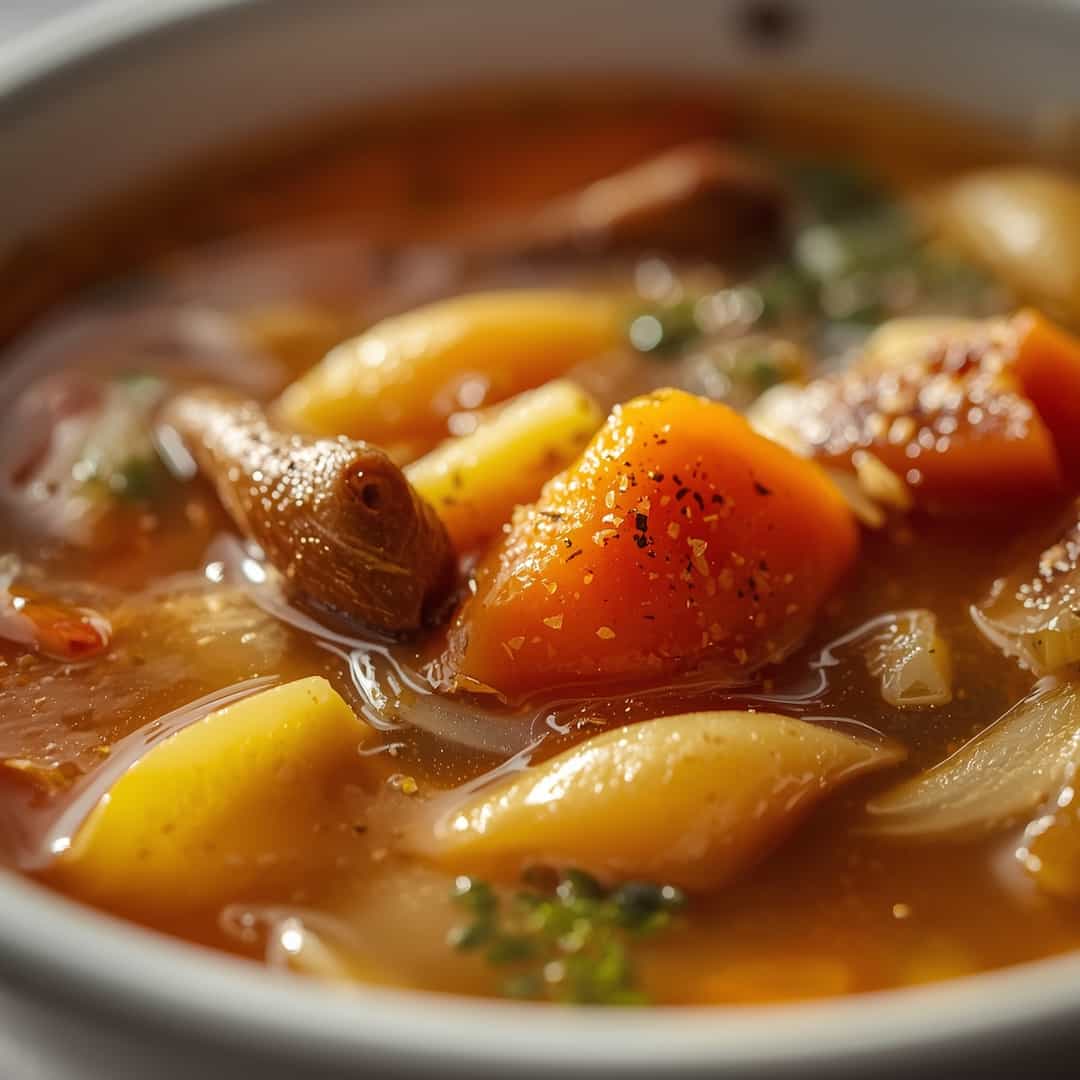
Homemade Vegetable Broth Canning
Ingredients
Equipment
Method
- Thoroughly wash all your collected vegetable scraps to remove dirt or debris. Chop any larger pieces into more manageable sizes. Rinse optional bones under cold water and pat them dry.8-10 cups vegetable scraps, 1-2 pounds chicken or beef bones
- Place all prepared vegetable scraps and optional bones into a large stockpot. Add the bay leaves, whole black peppercorns, and coriander seeds if using.8-10 cups vegetable scraps, 1-2 pounds chicken or beef bones, 2-3 bay leaves, 1 tablespoon whole black peppercorns, 1 teaspoon whole coriander seeds
- Pour enough filtered water into the pot to cover all ingredients by at least 2 inches.12-16 cups water
- Place the stockpot over high heat and bring the water to a rolling boil.
- Once boiling, immediately reduce the heat to low, cover the pot partially (leaving a small gap for steam to escape), and let it simmer gently. Skim off any foam or impurities that rise to the surface during the first hour of simmering.
- Allow the broth to simmer for a minimum of 2 hours for a good vegetable broth, or up to 4 hours for a richer flavor, especially if using bones. Regularly check to ensure the water level remains adequate to cover the solids; add a little more water if necessary.
- Carefully strain the broth through a fine-mesh sieve lined with cheesecloth (if you have it) into a large bowl or clean pot. Discard the solids.
- Allow the strained broth to cool down significantly at room temperature before proceeding with canning.
- Prepare your canning supplies: clean and sterilize your canning jars, lids, and bands according to manufacturer instructions. Ensure you have a large pot for water bath canning, a lid lifter, and jar lifters.
- Once the broth is cool enough to handle but still warm (around 180°F is ideal for hot-packing), ladle it into the sterilized jars, leaving 1 inch of headspace.
- Run a clean, non-metallic utensil around the inside of the jar to release any trapped air bubbles. Re-adjust headspace to 1 inch if necessary by adding more broth.
- Wipe the rims of the jars clean. Place the prepared lids on the jars and screw on the bands until they are fingertip-tight.
- Load the filled jars carefully into your preheated water bath canner, ensuring they are covered with at least 1-2 inches of water. Bring the water to a rolling boil.
- Process the jars for 20 minutes for pints and 25 minutes for quarts (adjust for altitude if necessary).
- After processing, carefully remove the canner lid and let the jars sit in the hot water for 5 minutes before using a jar lifter to remove them and place them on a towel-lined counter to cool completely.
- Once completely cool, check that the lids have sealed (they should be concave and not flex when pressed). Remove the bands from sealed jars.
- Wipe down the sealed jars, label them with the contents and date, and store them in a cool, dark place.