
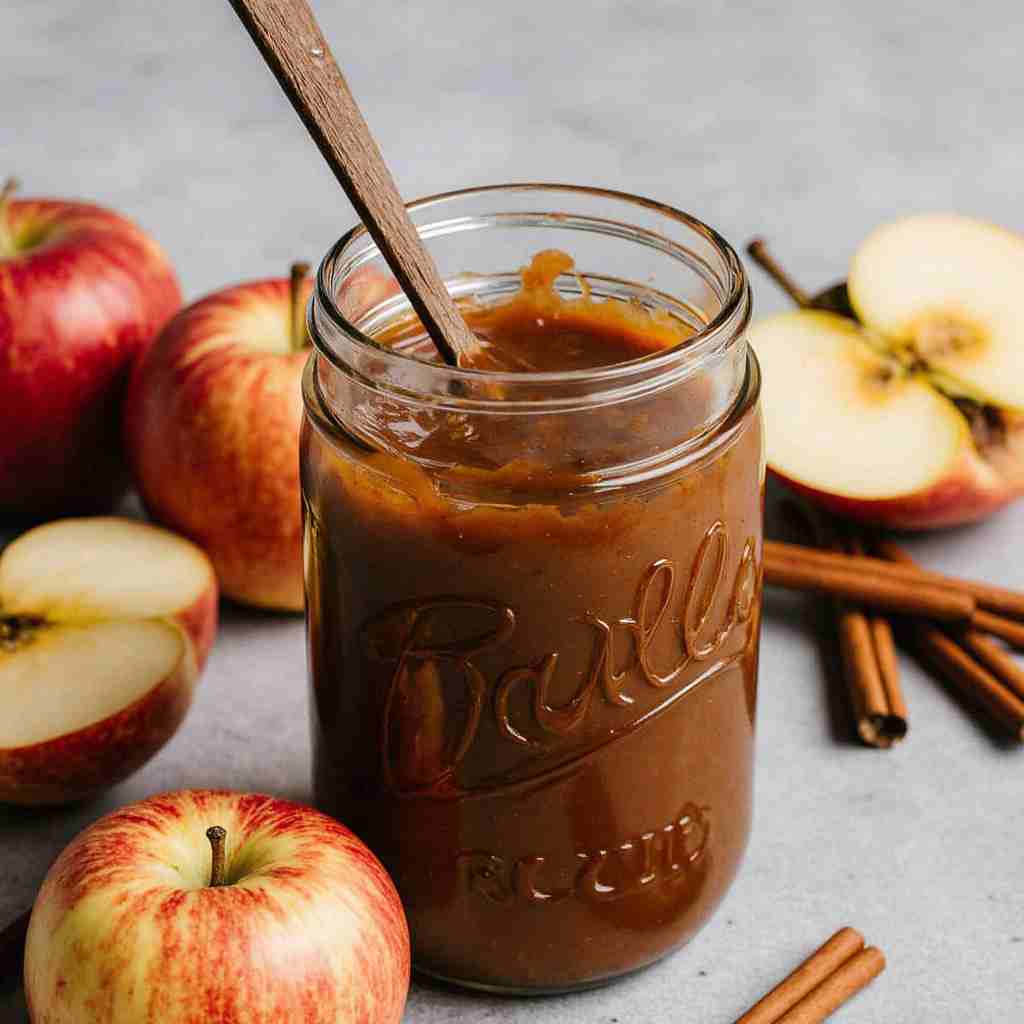
This Homemade Apple Butter recipe is the ultimate fall comfort spread — smooth, rich, and perfectly spiced. Made by slow-cooking fresh apples until they caramelize, it delivers deep, cozy flavors of cinnamon, nutmeg, and brown sugar in every spoonful. Despite its name, there’s no butter involved — just pure apple goodness transformed into a silky, spreadable treat.
Whether you slather it on warm toast, swirl it into oatmeal, or gift it in jars, this easy slow cooker apple butter brings the taste of autumn to your kitchen and fills your home with an irresistible aroma.
Table of Contents
What is Apple Butter?
Apple butter isn’t actually butter at all! It’s a highly concentrated form of applesauce, cooked down for hours until the natural sugars caramelize and deepen, creating a intensely sweet and spiced spread. The long cooking process gives it a luxuriously smooth texture and a depth of flavour far beyond regular applesauce. It’s a perfect way to use up a large harvest of apples and enjoy their taste long after the season is over. Its versatile enough to use on a variety of breakfast and meals.
Beyond its simple sweetness, apple butter offers nutritional value, retaining many of the vitamins and fiber present in fresh apples.
Ready to dive into making your own rich, homemade apple butter? Let’s get started!
Key Ingredients for Apple Butter:
- Apples: 6 pounds (approximately 18 medium-sized apples). A blend of varieties is ideal for a complex flavor. Consider using a mix of sweet apples like Fuji or Gala with tart apples like Granny Smith or Honeycrisp. Peel, core, and quarter the apples.
- Sugar: 1 1/2 cups granulated sugar. Adjust to your preference depending on the sweetness of your apples.
- Brown Sugar: 1/2 cup packed light brown sugar. Adds a caramel-like depth of flavor.
- Apple Cider Vinegar: 1/4 cup. Provides acidity to balance the sweetness and aids in preservation.
- Water: 1/2 cup. Helps to start the cooking process and prevents scorching.
- Spices:
- 2 teaspoons ground cinnamon
- 1 teaspoon ground nutmeg
- 1/2 teaspoon ground cloves. Adjust according to your preference.
- 1/4 teaspoon ground allspice (optional)
- Lemon Juice: 2 tablespoons. Adds brightness and helps prevent browning.
How to Make Apple Butter:
This slow-cooked apple butter recipe is unbelievably easy, yielding a rich, flavorful spread made with minimal effort. The slow cooker does most of the work, coaxing out the natural sweetness of the apples and intensifying the spices.
The aroma alone, filling your kitchen for hours, is a pure delight. It requires about 8-10 hours in your slow cooker, or until it reaches your desired thickness.
Step-by-Step Instructions:
Step 1: Prepare the Apples
Wash, peel, core, and quarter all 6 pounds of apples. A good apple peeler/corer can speed up this process. Don’t worry about perfection; the apples will break down during the cooking process.
Step 2: Combine Ingredients in the Slow Cooker
In a 6-quart or larger slow cooker, combine the prepared apples, granulated sugar, brown sugar, apple cider vinegar, ground cinnamon, ground nutmeg, ground cloves, allspice (if using), lemon juice and water. Stir well to ensure the spices and sugars are evenly distributed.
Step 3: Slow Cook the Apple Mixture
Cover the slow cooker and cook on low for 8-10 hours, or until the apples are very soft and easily mashed. The cooking time may vary depending on your slow cooker, so keep an eye on it. Stir occasionally, especially during the last few hours of cooking, to prevent sticking and ensure even cooking.
Step 4: Mash the Apples
Once the apples are cooked through, use an immersion blender to puree the mixture until smooth. Alternatively, carefully transfer the mixture in batches to a regular blender and puree until smooth. Be cautious when blending hot liquids, as they can splatter. If using a regular blender, allow the mixture to cool slightly before blending, and vent the lid to prevent pressure buildup.
Step 5: Continue Cooking to Thicken
After pureeing, return the mixture to the slow cooker. Leave the lid off or slightly ajar to allow moisture to evaporate and the butter to thicken. Cook on low for another 2-4 hours, or until the apple butter reaches your desired consistency. Stir occasionally to prevent sticking. The apple butter is ready when it’s a deep brown color and a spoonful placed on a chilled plate doesn’t spread rapidly.
Step 6: Prepare for Canning (Optional)
If you plan to can the apple butter for long-term storage, prepare your canning equipment before the apple butter finishes cooking. You’ll need:
- Clean pint or half-pint canning jars
- New lids
- Rings (screw bands)
- Canning pot with a rack
- Jar lifter
- Lid lifter (optional)
Wash the jars, lids, and rings in hot, soapy water. Rinse well. Sterilize the jars by placing them in a canning pot filled with water, bringing the water to a boil, and boiling for 10 minutes. Keep the jars hot until you’re ready to fill them. Simmer the lids in a separate saucepan of hot water (do not boil) to soften the sealing compound.
Step 7: Fill the Jars (Optional)
Ladle the hot apple butter into the hot, sterilized jars, leaving 1/4 inch headspace at the top. Wipe the jar rims clean with a damp cloth. Place the lids on the jars, and screw on the rings until fingertip tight (not too tight).
Step 8: Process the Jars (Optional)
Carefully lower the filled jars into the canning pot using a jar lifter. Ensure the jars are fully submerged in water, with at least 1 inch of water covering the tops of the jars. Bring the water to a rolling boil and process the jars for the appropriate time based on your altitude:
- 0-1,000 feet: 5 minutes for half-pints or pints
- 1,001-6,000 feet: 10 minutes for half-pints or pints
- Above 6,000 feet: 15 minutes for half-pints or pints
Step 9: Cool and Check Seals (Optional)
Turn off the heat and carefully remove the jars from the canning pot using a jar lifter. Place the jars on a towel-lined surface to cool undisturbed for 12-24 hours. As the jars cool, you may hear a popping sound, which indicates that the lids have sealed properly. After 24 hours, check the seals by pressing down on the center of each lid. If the lid doesn’t flex or make a popping sound, it’s sealed. If a lid doesn’t seal, you can either reprocess the jar with a new lid or store the apple butter in the refrigerator and use it within a few weeks.
Step 10: Store Your Apple Butter
Remove the rings from the sealed jars. Wipe the jars clean and label them with the date. Store the jars in a cool, dark place for up to 1 year. Once opened, refrigerate apple butter and use within a few weeks.
Step 11: (If not canning) Cool and store
Cool completely before placing in air tight containiner and storing in the refrigerator. Use within 2 weeks.
Final Thoughts
This Apple Butter Canning recipe brings the robust essence of fall straight to your table. The slow cooking process not only simplifies the preparation but also concentrates all the beautiful flavours from a combination of spices, apples and sugars into this delectable spread! Whether you’re a canning novice or a seasoned pro, you’ll find this recipe straightforward and satisfying.
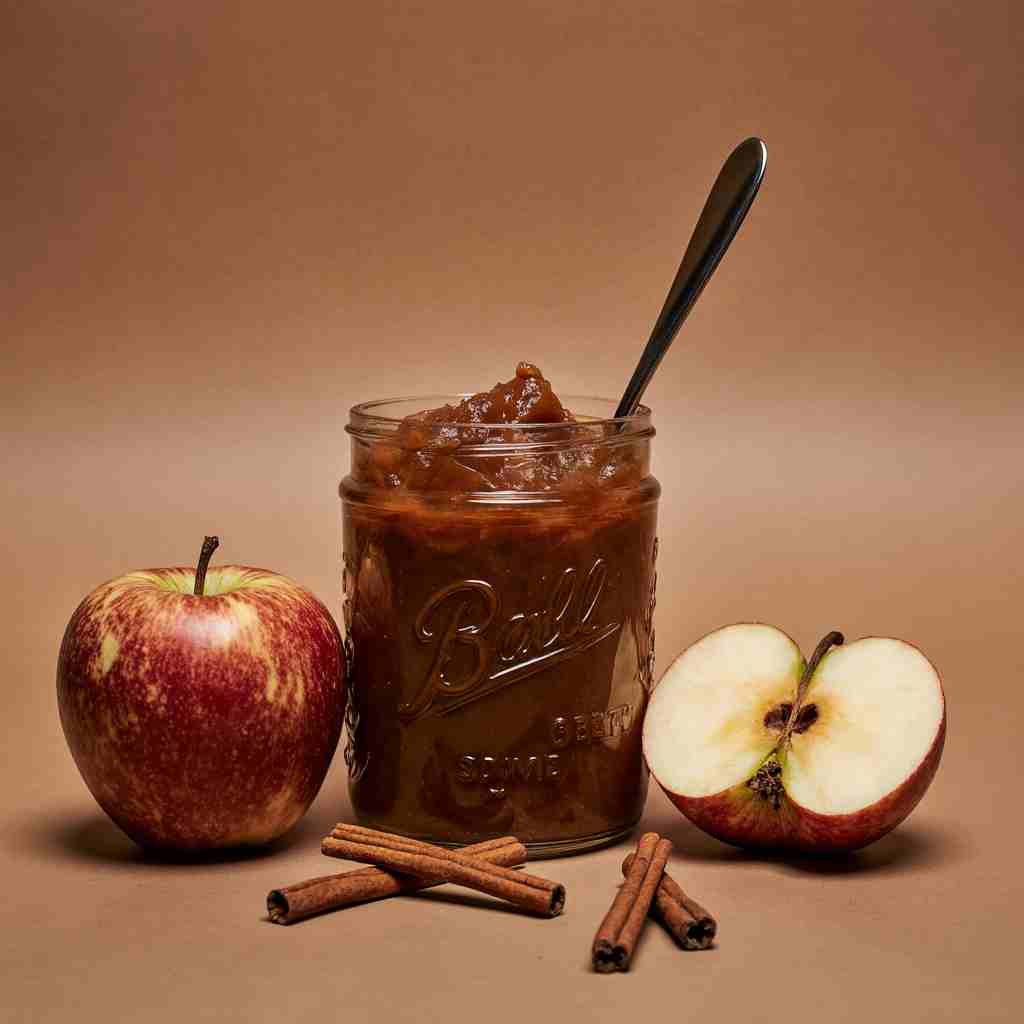
Enjoy the fruits (literally!) of your labor on freshly baked bread, creamy yogurt, or as a secret ingredient in your favorite baked goods or glazes.
Read more also:
- Strawberry Vanilla Bean Jam Recipe
- No-Sugar Added Strawberry Jam
- Peach and Lavender Jam
- Canning Fruit Syrups Homemade Recipe
- Our Pinterest
Apple Butter FAQs:
Q: What types of apples work best for apple butter?
A: A mix of sweet and tart apples creates the best flavor. Good choices include Fuji, Gala, Honeycrisp, Granny Smith, and McIntosh. Feel free to experiment with different combinations to find your favorite flavor profile.
Q: Can I reduce the amount of sugar in this recipe?
A: Yes, you can reduce the sugar, but keep in mind that sugar contributes to the preservation process. If you reduce the sugar significantly, you may need to refrigerate the apple butter instead of canning it. Consider using natural sweeteners like honey or maple syrup, but be aware that they may alter the flavor and texture of the apple butter.
Q: Can I freeze apple butter?
A: Yes, you can freeze apple butter. Allow it to cool completely, then transfer it to freezer-safe containers, leaving some headspace to allow for expansion. Frozen apple butter can last for up to 6-8 months. Thaw it in the refrigerator before using.
Q: My apple butter is too thin. What can I do?
A: If your apple butter is too thin, continue cooking it in the slow cooker with the lid off or slightly ajar to allow more moisture to evaporate. You can also transfer it to a saucepan and simmer it over low heat, stirring frequently, until it reaches your desired consistency.
Q: My apple butter is too thick. What can I do?
A: If your apple butter is too thick, add a small amount of apple juice or water and stir well to thin it out. Heat gently until the apple butter reaches your desired consistency.
Q: Do I have to use a slow cooker? Can I make this on the stovetop?
A: While the slow cooker method is preferred for its ease and hands-off approach, you can make apple butter on the stovetop. Use a heavy-bottomed pot to prevent scorching, and cook over low heat, stirring frequently, for several hours until the apples are completely soft and the mixture has thickened. This method requires more attention and stirring to prevent sticking.
Q: How long does canned apple butter last?
A: Properly canned apple butter can last for up to 1 year when stored in a cool, dark place. Once opened, refrigerate it and use it within a few weeks.
Q: Can I add other spices to my apple butter?
A: Absolutely! Feel free to experiment with other spices like ginger, cardamom, or star anise to customize the flavor of your apple butter.
Q: What are some ways to use apple butter?
A: Apple butter is incredibly versatile! Try it on toast, bagels, or crackers. Use it as a topping for pancakes, waffles, or oatmeal. Swirl it into yogurt or ice cream. Use it as a glaze for meats, such as pork or chicken. Add it to baked goods like muffins, cakes, or pies. You can even use it as a filling for thumbprint cookies.
Q: Why didn’t my jars seal?
A: Several factors can cause jars not to seal properly. Make sure the jar rims are clean before applying the lids. Ensure the lids are new and have not been previously used. Be sure to tighten the rings only fingertip tight, not too loose or too tight. Finally, make sure the processing time is adequate for your altitude.