
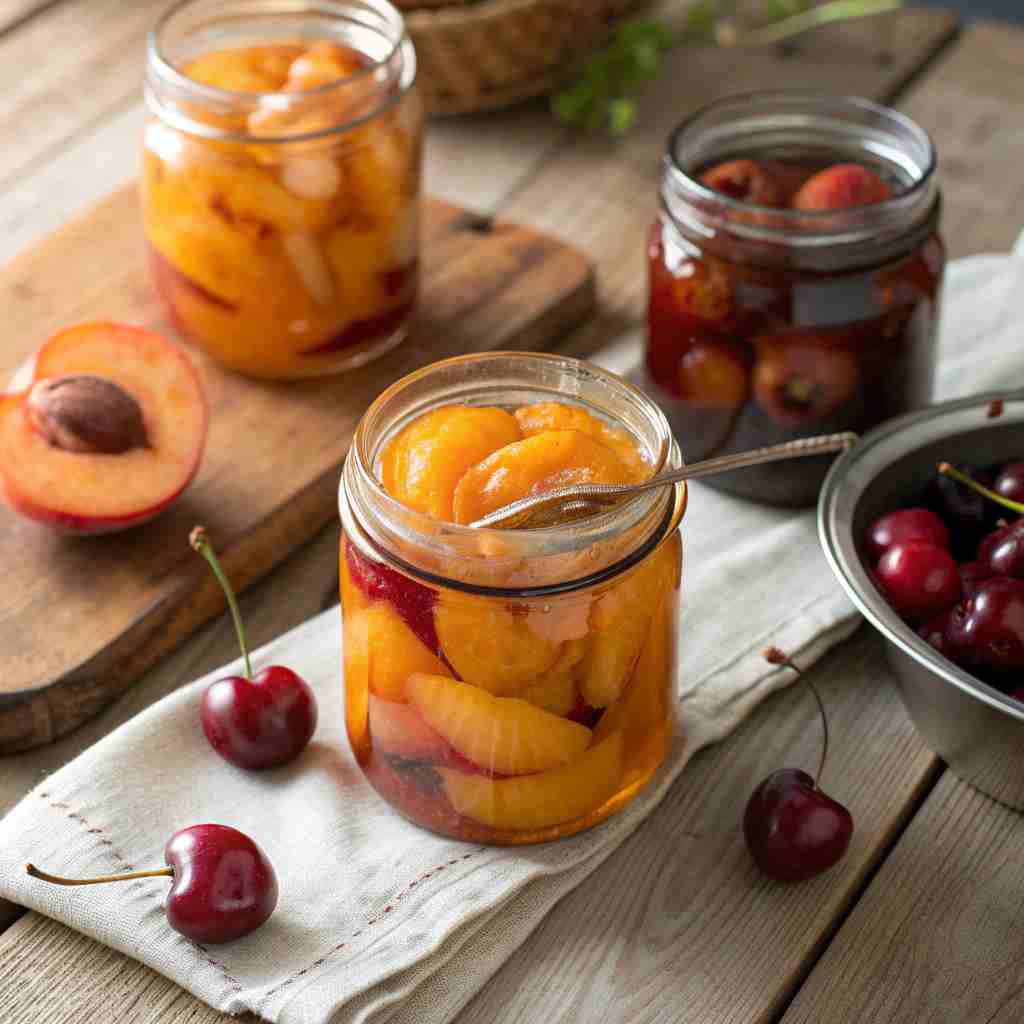
Canning stone fruits is a timeless way to preserve the sweet, juicy flavors of summer. By sealing peaches, plums, and cherries in jars with a light syrup or juice, you can enjoy fresh-tasting fruit all year long. This traditional canning method not only extends shelf life but also enhances natural sweetness, making your fruit perfect for desserts, breakfasts, or snacking straight from the jar. With a few simple tools and steps, you can master this rewarding preservation technique at home and capture the taste of summer in every spoonful.
Table of Contents
What is Canning Stone Fruits?
Canning stone fruits is the process of preserving fruits like peaches, plums, and cherries in sterilized jars using heat treatment to create an airtight seal. This inhibits spoilage and allows you to store these fruits for extended periods. The process involves preparing the fruit, packing it into jars, covering it with a syrup or juice, and then processing the jars in a boiling water bath or pressure canner depending on the fruit and recipe.
Properly canned stone fruits can be enjoyed in countless ways, from topping desserts and yogurt to using them in baked goods or simply eating them straight from the jar. By mastering this traditional preservation method, you can savor the taste of summer all year long. Ready to make the most of this season’s stone fruit harvest? Let’s get canning!
Key Ingredients for Canning Stone Fruits:
For Peaches:
- Ripe Peaches: As many as you desire to preserve – about 2 1/2 pounds per quart jar. Select freestone varieties for ease of preparation. They should be firm but slightly yielding to the touch.
- Sugar: For light syrup, use 2 cups of sugar per 4 cups of water. Adjust to your preference.
- Water: Use filtered water for the syrup.
- Lemon Juice: 1 tablespoon per quart jar – This helps preserve color and increases acidity for safety.
- Optional Spices: Cinnamon sticks, vanilla beans, or a few cloves for added flavor.
For Plums:
- Ripe Plums: About 2 1/2 pounds per quart jar; choose firm-ripe plums.
- Sugar: For light syrup, use 2 cups of sugar per 4 cups of water.
- Water: Filtered.
- Optional Spices: A pinch of star anise or a cinnamon stick for each jar.
For Cherries:
- Ripe Cherries: About 2 1/2 pounds per quart jar. Choose sweet or tart cherries depending on your preference.
- Sugar: For light syrup, use 2 cups of sugar per 4 cups of water.
- Water: Filtered.
- Lemon Juice: 1 tablespoon per quart jar (especially for sweet cherries, to increase acidity).
- Optional Almond Extract: A drop or two per jar to enhance the cherry flavor.
Essential Canning Supplies:
- Canning Jars: Pint or quart jars with lids and bands. Ensure they are clean and free from chips or cracks, purchase new lids.
- Boiling Water Bath Canner or Pressure Canner: Depending on the stone fruit you are canning, you will need one of these. (Peaches can be done with boiling water, plums and cherries are best canned with pressure cooker with low acidity)
- Jar Lifter: For safely lifting hot jars from the canner.
- Lid Wand: A magnetic wand to lift lids from hot water.
- Bubble Remover/Headspace Tool: To release air bubbles and measure the correct headspace.
- Large Pot: For making the syrup.
- Clean Kitchen Towels: To wipe jars and place them on after processing.
- Optional: Canning Funnel: Makes filling jars easier and cleaner.
How to Make Canning Stone Fruits:
Canning stone fruits is easier than you might think! This method highlights the simplicity of capturing peak season flavors, and allows you to enjoy your harvest year-round. Preserving these fruits takes approximately 1-2 hours, but the end result is fruit with a vibrant taste and satisfying texture which enhances desserts, breakfast, or as a stand-alone snack
- Preparation: Wash, pit when needed, and prepare your chosen stone fruit.
- Syrup Creation: Simple syrup is made by dissolving sugar in filtered water and heating to get the sweetness. This syrup acts as the preserving liquid for enhanced and extended time.
- Jar Packing: Pack your prepared fruit into sterilized jars with added spices if you would like to season.
- Processing: Finally, the jars undergo a heat process in either Boiling or Pressure to fully preserve for safety and freshness.
Step-by-Step Instructions:
Step 1: Prepare the Jars and Lids
- Wash canning jars, lids, and bands with hot, soapy water. Rinse thoroughly.
- Sterilize the jars by placing them in a boiling water bath canner and covering them with water. Bring to a boil and simmer for 10 minutes. Keep jars hot until ready to use. Alternatively, you can run them through a hot cycle in the dishwasher.
- Place lids in a small saucepan and cover with water. Heat to a simmer (not boiling) to soften the sealing compound. Do not boil. Keep hot until ready to use.
Step 2: Prepare the Fruit
- Peaches: Wash, peel, halve, and pit the peaches. To prevent browning, drop the peach halves into a bowl of water with lemon juice (1 tablespoon lemon juice per quart of water).
- Plums: Wash the plums. You can pit them or leave them whole. Prick the skin of each plum with a fork to prevent bursting.
- Cherries: Wash the cherries and pit them. If using sweet cherries, consider adding lemon juice to the jars for acidity.
Step 3: Make the Syrup
- In a large pot, combine sugar and water according to your desired syrup consistency (e.g., 2 cups sugar per 4 cups water for light syrup).
- Bring to a boil over medium heat, stirring until the sugar is completely dissolved. Reduce heat and simmer for 5 minutes.
- Keep the syrup hot.
Step 4: Pack the Jars
- Remove a hot jar from the canner using a jar lifter and place it on a towel-lined surface.
- Place a canning funnel in the mouth of the jar.
- Pack the prepared fruit into the jar, leaving ½-inch headspace (the space between the top of the fruit and the jar rim). For peaches, pack them with the cut side down, overlapping slightly.
- Add optional spices, such as cinnamon sticks, vanilla beans, or almond extract, to each jar.
Step 5: Add Syrup and Remove Air Bubbles
- Pour the hot syrup over the fruit, maintaining ½-inch headspace.
- Use a bubble remover or a clean plastic utensil to gently run along the inside of the jar to release any trapped air bubbles.
- Adjust headspace if necessary by adding more syrup.
Step 6: Wipe Jar Rim and Apply Lid and Band
- Wipe the jar rim with a clean, damp cloth to remove any spills or residue.
- Using a lid wand, carefully lift a hot lid from the simmering water and center it on top of the jar.
- Apply a band and tighten it fingertip-tight. This means tightening it until you feel resistance, then backing off slightly. Do not overtighten.
Step 7: Process the Jars
- Boiling Water Bath Canning (Peaches):
- Carefully place the filled jars into the boiling water bath canner, ensuring they are not touching each other. Add more hot water if necessary to cover the jars by at least 1 inch.
- Bring the water to a rolling boil. Once boiling, start the timer and process for the recommended time based on your altitude and jar size. (Pint: 25 minutes, Quart: 30 Minutes, Sea level-1000ft altitude) Consult with a local canning guide for exact times.
- Pressure Canning (Plums and Cherries):
- Follow the manufacturer’s instructions for your pressure canner. Typically, this involves adding the specified amount of water to the canner, placing the jars on the rack, and sealing the lid.
- Vent the canner to remove air, then close the vent and bring it to the required pressure (usually 11 PSI for weighted gauge canners or 10 PSI for dial gauge canners).
- Process for the recommended time based on jar size and your altitude (Pints: 10 minutes, Quarts: 15 minutes, Sea level-1000ft altitude). Always follow recommended pressure guidelines per a local canning manual.
- Turn off the heat and allow the pressure to drop naturally before opening the canner. Do not force the pressure to drop by running cold water over the canner.
Step 8: Cool and Check the Seals
- Using a jar lifter, carefully remove the jars from the canner and place them on a towel-lined surface, allowing at least 1 inch of space between the jars.
- Do not disturb the jars for 12-24 hours. Let them cool completely.
- After cooling, check the seals by pressing down on the center of each lid. If the lid is concave (curved downward) and doesn’t flex, the jar is properly sealed. If the lid flexes, the jar is not sealed and should be refrigerated and used soon or reprocessed with a new lid within 24 hours.
Step 9: Store the Jars
- Remove the bands from the sealed jars. Wash the jars and bands to remove any stickiness.
- Label the jars with the date and contents.
- Store the jars in a cool, dark, and dry place for up to one year.
Why You’ll Love This Canning Stone Fruits
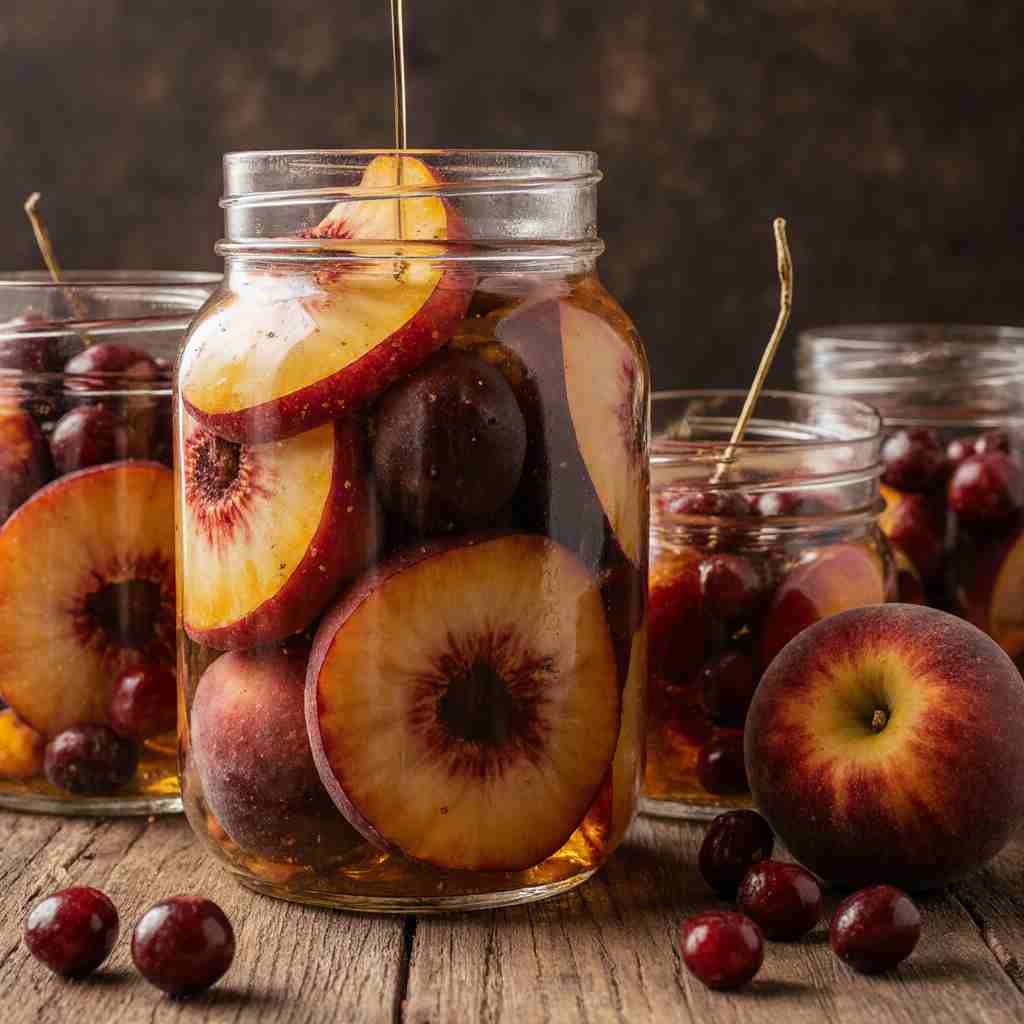
You’ll love canning stone fruits because it offers a simple way to preserve the fresh, vibrant flavors of summer. The high sweetness and fruit quality of canned peaches, plums, and cherries are delightful as is, or as toppings for desserts and breakfast items. Making your own canned fruit is significantly cheaper than buying store-bought versions. You control the sugar level, avoid any artificial preservatives like you would when buying in a supermarket, and use fruit you know comes locally from farm to table.
Unlike jams or jellies, which require more involved cooking processes, canning allows you to retain more of the fruit’s natural texture and flavor. Love Cherry Pie? Then you’ll love using your preserved fruit for a homemade one at anytime of the year! Give it a try and bring the joy of summer all year indoors!
What to Serve Canning Stone Fruits With:
Canned stone fruits are incredibly versatile and can be served with a variety of dishes and pairings:
- Yogurt or Oatmeal: Top your morning yogurt or oatmeal with canned peaches, plums, or cherries for a sweet and fruity start to your day.
- Pancakes or Waffles: Warm the canned fruit and drizzle over pancakes or waffles for a delightful breakfast treat.
- Ice Cream: Canned stone fruits make a delicious topping for vanilla or chocolate ice cream.
- Baked Goods: Use canned fruits in pies, tarts, cobblers, or crumbles.
- Roasted Meats: Serve alongside roasted pork or chicken for a sweet and savory contrast.
- Cheese Plate: Add canned plums or cherries to a cheese plate for a sweet and tangy accompaniment.
- Cocktails: Muddle canned fruit into cocktails for a burst of flavor.
Top Tips for Perfecting Canning Stone Fruits:
Here are some valuable tips to enhance your stone fruit canning process and flavor:
- Fruit Selection: Always choose the freshest, ripest fruits for canning. Overripe fruit can become mushy during processing.
- Syrup Consistency: Adjust the sugar level in the syrup to your preference. A light syrup is generally recommended to let the natural flavor of the fruit shine through.
- Lemon Juice: Adding lemon juice is crucial, especially when canning sweet cherries or peaches. It helps increase the acidity, ensuring safe preservation and preventing discoloration.
- Headspace: Maintaining the correct headspace is important for creating a proper seal. Too little headspace can cause the jars to buckle, while too much can lead to spoilage.
- Altitude Adjustment: Remember to adjust processing times according to your altitude. Higher altitudes require longer processing times due to the lower boiling point of water.
- Jar Inspection: Before filling the jars, inspect them for any cracks or chips. Damaged jars can break during processing.
- Cooling Time: Do not rush the cooling process. Allow the jars to cool completely before checking the seals.
- Avoiding Scalding: When peeling peaches, a common method invlolves briefly scalding them in boiling water to loosen the skins. Be absolutely sure to only leave them in boiling water for about 30 seconds (or less). If left too long they’ll become mushy, yielding a subpar texture
Health Benefits of Canning Stone Fruits:
While freshly picked fruit always offers the most nutritional value, canning allows you to preserve many beneficial vitamins and minerals found in stone fruits. Peaches, plums, and cherries are rich in Vitamin C, Vitamin A, potassium, and fiber. Canning also preserves the antioxidant properties of these fruits, which help combat free radicals in the body.
Keep in mind that the added sugar in the syrup does contribute to the overall calorie count, so consume in moderation as part of a balanced diet. Making your own canning in a sterilized and sustainable approach can be a great method in keeping your family feed for the following year!
Storing and Reheating Tips:
Storing:
- Store sealed jars of canned stone fruits in a cool, dark, and dry place, preferably away from direct sunlight. This helps maintain the quality and color of the fruit.
- Properly sealed jars can be stored for up to one year.
- After opening a jar, transfer any remaining fruit to an airtight container and refrigerate it. Consume within 1-2 weeks.
Reheating:
- Canned stone fruits can be enjoyed cold or reheated.
- To reheat, simply place the desired amount of fruit in a saucepan over low heat and warm gently. Avoid boiling, as this can make the fruit mushy.
- Alternatively, you can microwave the fruit in a microwave-safe bowl for 30-60 seconds or until heated through.
Freezing:
- It is not advised to refreeze canned fruits.
- Freeing is not recommended as it changes the texture of the fruit, making it too soft.
- If you have leftover canned fruit that you don’t plan to use within a week or two, consider blending it into a smoothie or using it in a baked dish.
Final Thoughts:
Canning stone fruits is a rewarding way to preserve the delicious flavors of summer for year-round enjoyment. With this comprehensive guide, you can confidently prepare and can peaches, plums, and cherries. From selecting the best fruit and preparing the syrup to packing the jars and following proper processing methods, you now have the knowledge to create perfectly canned stone fruits that your family and friends will love.
Read more also:
- Strawberry Vanilla Bean Jam Recipe
- No-Sugar Added Strawberry Jam
- Peach and Lavender Jam
- Canning Fruit Syrups Homemade Recipe
- Our Pinterest
Canning Stone Fruits FAQs:
Q: What is the best type of fruit to use for canning?
A: Choose firm-ripe, blemish-free fruit at its peak of flavor. Freestone peaches are easier to pit and prepare.
Q: Can I use honey or other sweeteners instead of sugar in the syrup?
A: While you can experiment with alternative sweeteners, it’s essential to follow a tested and approved canning recipe that specifies their use. Sugar not only adds sweetness but also helps preserve the fruit’s color and texture.
Q: How do I know if my jars are properly sealed?
A: After cooling, press down on the center of each lid. If the lid is concave (curved downward) and doesn’t flex, the jar is properly sealed. If the lid flexes, the jar is not sealed and should be refrigerated and used soon or reprocessed with a new lid within 24 hours.
Q: Can I reuse canning lids?
A: No, canning lids should only be used once. The sealing compound on the lid is designed for a single use to ensure a proper seal. However, you can reuse the metal bands.
Q: What happens if a jar doesn’t seal?
A: If a jar doesn’t seal, you have two options: refrigerate the contents and use them within a week or reprocess the jar with a new lid within 24 hours.
Q: How long can I store canned stone fruits?
A: Properly canned stone fruits can be stored in a cool, dark, and dry place for up to one year.
Q: Do I need to sterilize my jars before canning?
A: Yes, sterilizing jars is recommended to eliminate any bacteria or microorganisms that could spoil the canned fruit.
Q: Can I add alcohol, like bourbon, to the jars for flavouring?
A: Doing so is not recommended as adding alcohol can alter the canning process, potentially leading to spoilage depending on percentage alcohol used.