
Dandelion Tea Jelly Syrup is a wonderfully versatile ingredient, perfect for adding a unique floral sweetness to your favorite beverages and desserts. This simple recipe transforms humble dandelion flowers into a delightful syrup, offering a cost-effective and delicious way to infuse a touch of nature into your kitchen.
Key Ingredients for Dandelion Tea Jelly Syrup:
- 2 cups tightly packed fresh dandelion blossoms (petals only, no green parts)
- 4 cups boiling water
- 2 cups granulated sugar
- 1/4 cup fresh lemon juice
- 1 tablespoon pectin (optional, for a thicker syrup or jelly consistency)
How to Make Dandelion Tea Jelly Syrup:
This Dandelion Tea Jelly Syrup recipe is a delightful journey from foraging to flavor, promising an easy, delicious, and satisfying result. Its simplicity belies the sophisticated floral notes it imparts, creating a truly unique taste experience. With a preparation time of approximately 30 minutes plus steeping and cooling, you’ll be enjoying this exquisite syrup in no time.
Step-by-Step Instructions:
- Prepare the Dandelion Petals: Gently pluck the yellow petals from the dandelion blossoms. Discard the green sepals and any stems, as these can impart a bitter flavor. You’ll need about 2 cups of tightly packed petals. Rinse them gently if they appear dusty.
- Steep the Dandelion Petals: Place the prepared dandelion petals in a heatproof bowl or a large jar. Pour the 4 cups of boiling water over the petals. Stir gently to ensure all petals are submerged. Cover the bowl or jar and let it steep for at least 4 hours, or preferably overnight, in the refrigerator. This process extracts the subtle floral essence from the petals.
- Strain the Infusion: Once steeped, strain the liquid through a fine-mesh sieve lined with cheesecloth (if you have it) into a clean saucepan. Gently press on the petals to extract as much liquid as possible, but avoid squeezing too hard, which can release bitterness. Discard the dandelion petals. You should have a golden-hued liquid.
- Add Sugar and Lemon Juice: To the strained dandelion infusion in the saucepan, add the 2 cups of granulated sugar and the 1/4 cup of fresh lemon juice. Stir well to dissolve the sugar.
- Cook the Syrup: Place the saucepan over medium heat. Bring the mixture to a gentle boil, stirring constantly. Once it reaches a rolling boil, reduce the heat slightly and continue to simmer.
- Thicken the Syrup (Optional): If you desire a thicker syrup or want to make a jelly, stir in the 1 tablespoon of pectin at this stage, following the pectin package instructions for dissolving and activating it. It usually involves whisking it into a small amount of the hot liquid before adding it back to the main pot.
- Simmer to Desired Consistency: Continue to simmer the syrup, stirring occasionally, until it reaches your desired consistency. For a pourable syrup, simmer for about 10-15 minutes. For a thicker jelly-like consistency, simmer for 20-30 minutes, or until a small amount dripped from a spoon gels slightly.
- Jar the Syrup: Carefully ladle the hot Dandelion Tea Jelly Syrup into clean, sterilized jars or bottles. Leave a small amount of headspace at the top. Wipe the rims of the jars clean with a damp cloth.
- Seal and Cool: Seal the jars tightly with lids. Allow the jars to cool completely at room temperature. As they cool, you may hear a popping sound, indicating a good seal.
Why You’ll Love This Dandelion Tea Jelly Syrup:
You’ll adore this Dandelion Tea Jelly Syrup for its incredibly delicate, naturally sweet floral notes that transport you to a sunny meadow. Unlike heavily processed sweeteners, this syrup offers a pure, earthy sweetness with a hint of citrus from the lemon, making it a sophisticated alternative to conventional syrups. Making this at home is also wonderfully cost-effective, allowing you to harness the bounty of nature for pennies on the dollar, especially when dandelions are abundant. Imagine drizzling this golden elixir over fluffy pancakes, stirring it into iced tea for a refreshing twist, or even using it as a glaze for roasted chicken – the possibilities are delightfully endless!
This homemade Dandelion Tea Jelly Syrup is a celebration of simple, natural flavors, offering a unique taste that’s both comforting and invigorating. Compared to store-bought floral syrups, which can often be overly sweet or artificially flavored, this recipe provides a subtle, authentic blossom essence that truly shines. So, why not gather some dandelions and create this magical syrup yourself? It’s a rewarding way to connect with nature and elevate your culinary creations with a touch of homemade goodness. Give it a try – your taste buds will thank you!
Storing and Reheating Tips:
- Storage: Properly sealed jars of Dandelion Tea Jelly Syrup can be stored in a cool, dark pantry for up to 6-12 months. Once opened, refrigerate the syrup and it will stay fresh for approximately 2-3 months.
- Reheating: If stored in the refrigerator and the syrup becomes too thick to pour, you can gently warm it by placing the opened jar in a bowl of warm water, or by carefully pouring the desired amount into a small saucepan and heating it over low heat until it reaches your desired pouring consistency. Do not boil the syrup once it has cooled and been stored.
- Freezing: While not typically necessary given its pantry stability, you can freeze Dandelion Tea Jelly Syrup in airtight, freezer-safe containers or ice cube trays for longer storage. Freezing will preserve its flavor for up to a year. Thaw frozen syrup completely in the refrigerator before using.
Final Thoughts:
This Dandelion Tea Jelly Syrup is a testament to the sweet secrets hidden in nature, offering a simple yet profound flavor experience. Encourage your inner forager and creator to whip up a batch – you’ll be delighted by its charm and versatility.
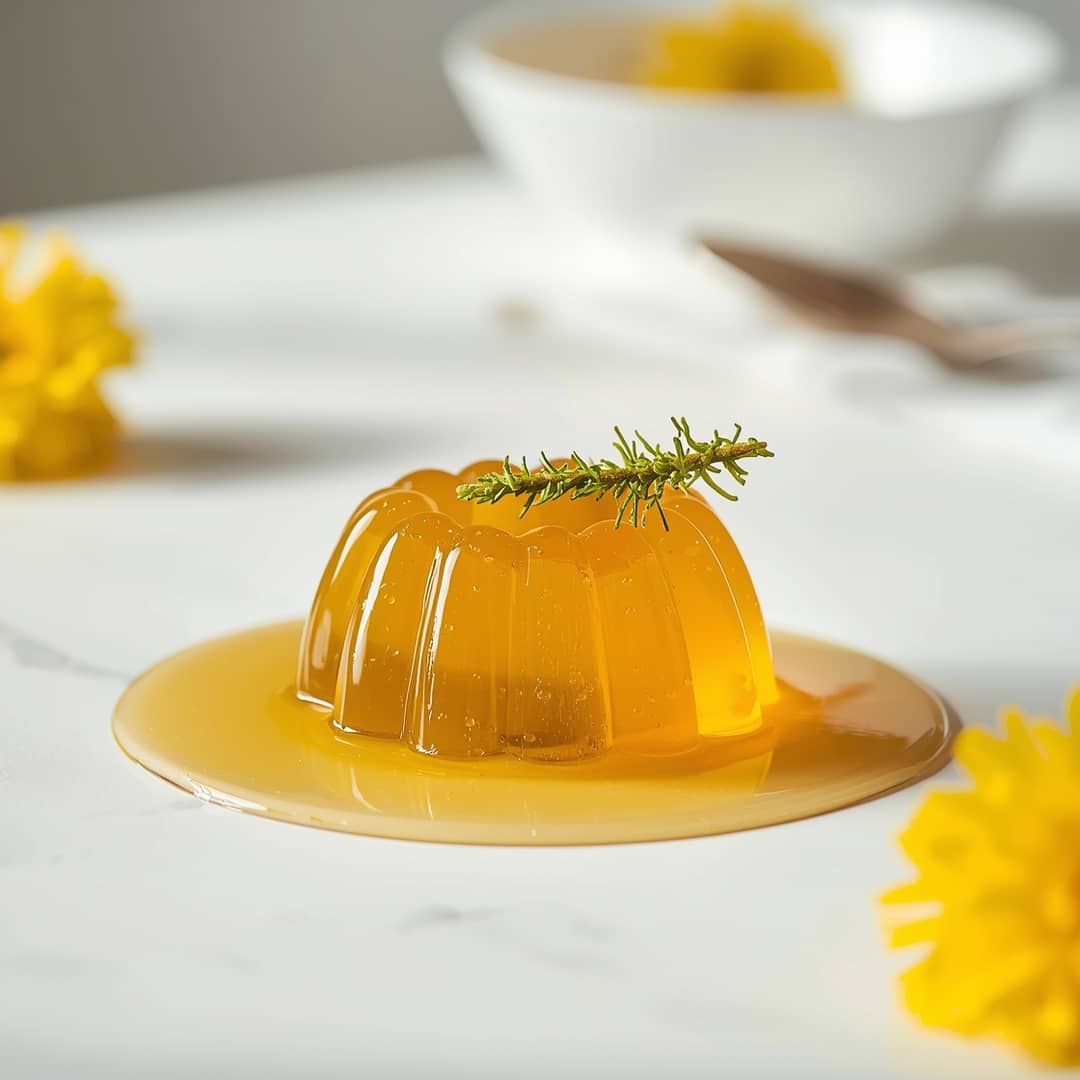
Dandelion Tea Jelly Syrup
Ingredients
Equipment
Method
- Gently pluck the yellow petals from the dandelion blossoms. Discard the green sepals and any stems, as these can impart a bitter flavor. You’ll need about 2 cups of tightly packed petals. Rinse them gently if they appear dusty.2 cups tightly packed fresh dandelion blossoms (petals only, no green parts)
- Place the prepared dandelion petals in a heatproof bowl or a large jar. Pour the 4 cups of boiling water over the petals. Stir gently to ensure all petals are submerged. Cover the bowl or jar and let it steep for at least 4 hours, or preferably overnight, in the refrigerator. This process extracts the subtle floral essence from the petals.2 cups tightly packed fresh dandelion blossoms (petals only, no green parts), 4 cups boiling water
- Once steeped, strain the liquid through a fine-mesh sieve lined with cheesecloth (if you have it) into a clean saucepan. Gently press on the petals to extract as much liquid as possible, but avoid squeezing too hard, which can release bitterness. Discard the dandelion petals. You should have a golden-hued liquid.
- To the strained dandelion infusion in the saucepan, add the 2 cups of granulated sugar and the 1/4 cup of fresh lemon juice. Stir well to dissolve the sugar.2 cups granulated sugar, 1/4 cup fresh lemon juice
- Place the saucepan over medium heat. Bring the mixture to a gentle boil, stirring constantly. Once it reaches a rolling boil, reduce the heat slightly and continue to simmer.
- If you desire a thicker syrup or want to make a jelly, stir in the 1 tablespoon of pectin at this stage, following the pectin package instructions for dissolving and activating it. It usually involves whisking it into a small amount of the hot liquid before adding it back to the main pot.1 tablespoon pectin (optional)
- Continue to simmer the syrup, stirring occasionally, until it reaches your desired consistency. For a pourable syrup, simmer for about 10-15 minutes. For a thicker jelly-like consistency, simmer for 20-30 minutes, or until a small amount dripped from a spoon gels slightly.
- Carefully ladle the hot Dandelion Tea Jelly Syrup into clean, sterilized jars or bottles. Leave a small amount of headspace at the top. Wipe the rims of the jars clean with a damp cloth.
- Seal the jars tightly with lids. Allow the jars to cool completely at room temperature. As they cool, you may hear a popping sound, indicating a good seal.