
Easy Pickled Garlic Scapes Recipe: A Crunchy, Zesty Delight
Garlic scapes, the tender flower stalks of hardneck garlic, are a fleeting springtime treasure. Learning how to preserve these flavorful greens is a game-changer for extending their season. This Easy Pickled Garlic Scapes Recipe transforms them into a tangy, crunchy condiment perfect for snacking or adding zing to your favorite dishes.
Why You Will Love This Recipe
This recipe is incredibly simple, requiring minimal active cooking time. You get a fantastic burst of flavor that combines the mild garlicky punch of the scapes with bright vinegar and aromatic spices. Furthermore, pickling is a wonderful way to reduce food waste by utilizing a part of the garlic plant that is often discarded. These pickled scapes keep well, meaning you can enjoy the taste of spring well into the fall and winter.
Ingredients
- 1 pound fresh garlic scapes, tough ends trimmed
- 2 cups white distilled vinegar (5% acidity)
- 2 cups water
- 2 tablespoons pickling salt (or non-iodized salt)
- 1 tablespoon granulated sugar
- Optional seasoning: 1 teaspoon whole black peppercorns per jar
- Optional seasoning: 1/2 teaspoon mustard seeds per jar
- Optional seasoning: 1 small sprig fresh dill per jar (optional)
Step-by-Step Instructions
- Prepare the Scapes: Wash the garlic scapes thoroughly. Trim off the tough, woody ends (usually the bottom 1-2 inches) and cut the remaining tender stalks into 1-inch to 2-inch long pieces.
- Pack the Jars: Tightly pack the cut scapes into clean, sterilized pint-sized Mason jars. If using optional seasonings like peppercorns, mustard seeds, or dill, add them to the jars now, distributing them evenly.
- Make the Brine: In a medium, non-reactive saucepan, combine the vinegar, water, pickling salt, and sugar. Stir well until the salt and sugar are completely dissolved.
- Heat the Brine: Bring the brine mixture just to a boil over medium-high heat, stirring occasionally. Remove immediately from the heat once it reaches a rolling boil.
- Pour the Brine: Carefully pour the hot brine over the scapes in the jars, ensuring the liquid completely covers the scapes. Leave about 1/2 inch of headspace at the top of the jar.
- Remove Air Bubbles: Gently tap the jars on the counter to release any trapped air bubbles. Add more brine if necessary to cover the scapes fully.
- Seal and Cool: Wipe the rims clean, affix the lids and bands finger-tight. Let the jars cool on the counter until they reach room temperature.
- Cure: Once cooled, transfer the jars to the refrigerator. Allow the pickled garlic scapes to cure for at least one week before eating to allow the flavors to fully develop.
Expert Tips / Pro Tips
- Choosing the Right Scapes: Select young, bright green scapes that are firm and not wilted. Older scapes can become woody and tough, even after pickling.
- Brine Clarity: For the clearest brine, use distilled water rather than tap water, which can sometimes contain minerals that cause cloudiness.
- Processing for Shelf Stability: While this recipe focuses on refrigerator pickles (shorter shelf life), if you wish to store them long-term in the pantry, process the sealed jars in a boiling water bath canner for 10 minutes after sealing.
- Don’t Discard the Brine: The leftover pickling brine is infused with garlic flavor. Use it! It makes an excellent, slightly garlicky vinaigrette base or add a splash to Bloody Mary mixes.
Variations & Substitutions
- Spicy Kick: Add 1/2 teaspoon of red pepper flakes or a few thin slices of jalapeño to each jar for a spicy pickled garlic scape experience.
- Herbal Infusion: Replace the dill with fresh thyme sprigs or bay leaves for a more earthy flavor profile.
- Sweet & Sour Balance: If you prefer a slightly sweeter pickle, increase the sugar in the brine to 1.5 tablespoons.
- Vinegar Swap: For a mellower, fruitier flavor, substitute half of the white vinegar with apple cider vinegar.
Serving Suggestions
These pickles are remarkably versatile. Serve them straight from the jar as a crunchy appetizer or snack. They are fantastic chopped and mixed into potato or macaroni salads for an extra layer of savory depth. Place them on charcuterie boards, smash them into creamy dips, or chop them finely to top grilled steaks or pizzas. They also complement rich, fatty foods beautifully by cutting through the richness with their acidity.
Storage, Freezing & Reheating
Refrigerator Pickled Scapes: Store the sealed jars in the refrigerator. They will maintain excellent quality for up to 3 months. After opening, consume within 3 to 4 weeks, keeping the jar submerged in brine.
Freezing: Pickling is a preservation method that utilizes the acidity of vinegar; freezing the brine and scapes together is generally not recommended as it severely compromises the texture, making them mushy upon thawing.
Reheating: There is no need to reheat pickled garlic scapes; they are intended to be eaten cold or at room temperature.
Nutrition Information
Note: Nutritional facts are approximations based on the recipe ingredients listed, primarily reflecting the brine solution absorbed. Serving size highly impacts these figures.
| Nutrient | Amount (Per serving approx.) |
|---|---|
| Calories | 20 kcal |
| Total Fat | 0g |
| Sodium | 150mg (Varies based on salt used) |
| Total Carbohydrates | 4g |
| Sugars | 2g |
| Protein | 0.5g |
FAQ
Can I use regular table salt instead of pickling salt?
You can, but it is generally advised to use pickling salt or coarse kosher salt because regular table salt contains anti-caking agents (like iodine) that can cause the brine to become cloudy, and the iodine can sometimes slightly discolor the scapes.
How will I know if my pickled garlic scapes have gone bad?
If you notice significant cloudiness that wasn’t there initially (beyond slight fermentation haze), fuzzy or mold growth on the surface, an off or foul odor, or if the lid of a refrigerated jar pops up, discard the contents immediately. Safe pickles should smell sharply vinegary and look crisp.
How long do the garlic scapes need to cure before eating?
While they are technically safe to eat after 24 hours, the best results for the Easy Pickled Garlic Scapes Recipe come after they have cured in the refrigerator for at least 7 days. This allows the vinegar and spices to fully penetrate the scapes.
Can I use garlic bulbs instead of scapes in this recipe?
You can pickle garlic cloves using a similar brine, but the texture and flavor profiles will be different. Garlic scapes are more tender and grassy, whereas whole cloves will remain much firmer and pungent.
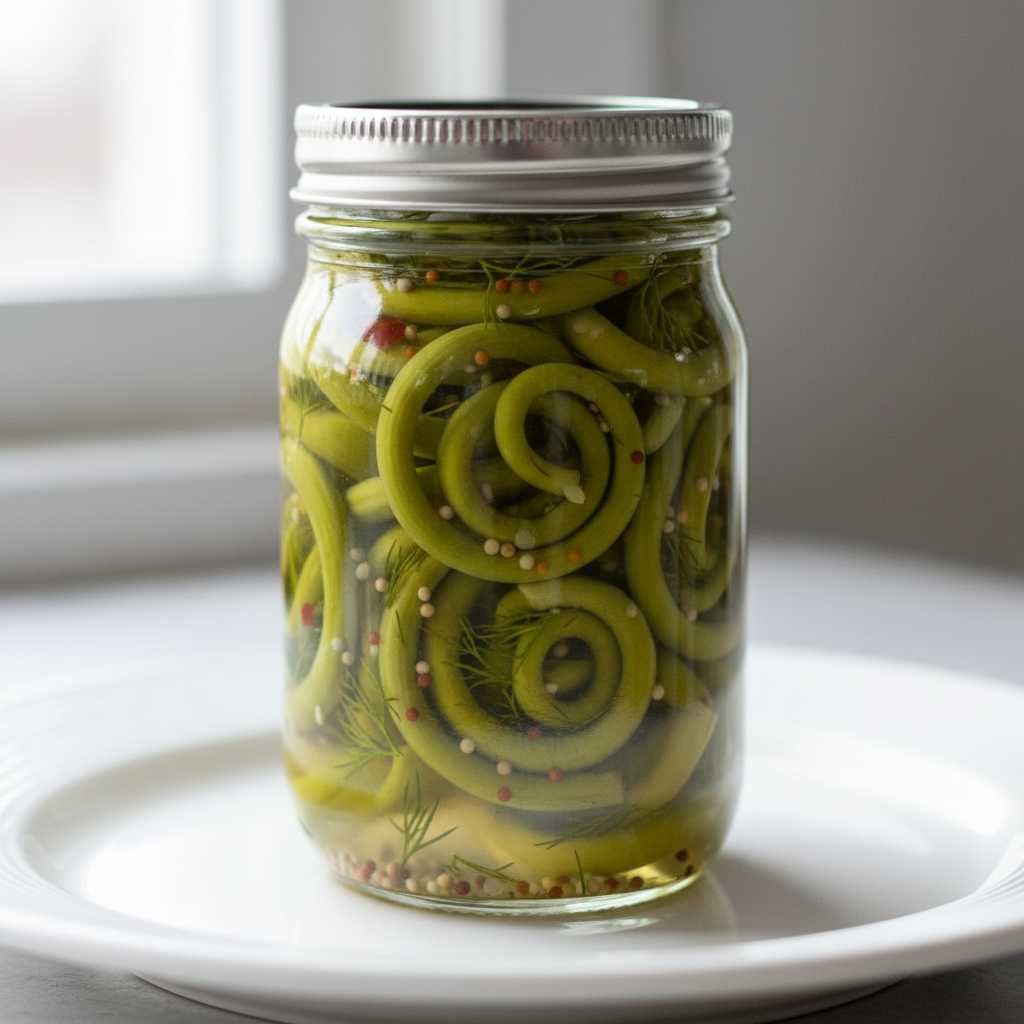
Easy Pickled Garlic Scapes Recipe
Ingredients
Method
- Prepare the garlic scapes: Wash the scapes thoroughly. Trim off the tough bottom ends and the remainder of the flower bud if present. Cut the scapes into uniform 2-inch pieces.
- Sterilize your jar: Make sure your quart-sized canning jar and lid are clean. If you prefer a longer shelf life, can the jars using a hot water bath method (not detailed here, but recommended for preservation). For refrigerator pickles, a simple wash is sufficient.
- Pack the jar: Place the optional whole garlic cloves, mustard seeds, and peppercorns into the bottom of the prepared jar. Firmly pack the 2-inch pieces of garlic scapes vertically into the jar.
- Make the brine: In a small saucepan, combine the water, white vinegar, kosher salt, and sugar. Bring the mixture to a boil over medium-high heat, stirring occasionally until the salt and sugar are completely dissolved. Remove from heat.
- Pour and seal: Carefully pour the hot brine over the packed scapes in the jar, ensuring the liquid fully covers the scapes. Leave about 1/2 inch of headspace at the top. Tap the jar gently to release any trapped air bubbles.
- Cool and refrigerate: Allow the jar to cool on the counter for about 30 minutes. Once cool, seal the jar tightly with the lid and transfer to the refrigerator. Allow to pickle for at least 24 hours before tasting, although they are best after 1 week.