
Unlock the secret to homemade deliciousness with enchilada sauce canning, ensuring you always have a vibrant, flavorful base for your Mexican-inspired meals, saving you time and enhancing your culinary creations. This comprehensive guide provides everything you need to confidently can your own enchilada sauce, guaranteeing pantry-ready perfection. Dive into this essential skill to elevate your home cooking and savor the convenience of a well-stocked pantry.
Key Ingredients for Enchilada Sauce Canning
To embark on your enchilada sauce canning journey, gather these high-quality ingredients:
- 2 tablespoons olive oil (for sautéing and flavor base)
- 1 large onion, finely chopped (provides aromatic depth)
- 4 cloves garlic, minced (essential for robust flavor)
- ½ cup all-purpose flour (serves as a thickener for the roux)
- ¼ cup chili powder (the cornerstone spice, choose a good quality one for best flavor)
- 2 tablespoons ground cumin (adds warmth and earthiness)
- 1 tablespoon dried oregano (preferably Mexican oregano for authenticity)
- 1 teaspoon smoked paprika (for a smoky undertone)
- 1 teaspoon salt (adjust to taste, essential for seasoning)
- ½ teaspoon black pepper (freshly ground is always best)
- 6 cups vegetable broth or chicken broth (low sodium is recommended for canning control)
- 1 (15-ounce) can tomato sauce (adds body and a subtle tang)
- 2 tablespoons apple cider vinegar (crucial for canning safety and adds brightness)
- Optional: 1 teaspoon sugar (to balance acidity, if needed)
How to Make Enchilada Sauce for Canning
This homemade enchilada sauce is incredibly easy to prepare, yielding a rich, savory, and perfectly spiced base that’s far superior to store-bought varieties. In just about 45 minutes of active preparation time, you’ll create a deeply flavorful sauce with a satisfyingly smooth texture, making your future enchilada nights a breeze. The simplicity of creating this robust flavor profile is truly rewarding, setting the stage for unforgettable meals.
● Step-by-Step Instructions:
Prepare Canning Jars: Begin by sterilizing your canning jars and lids. You can do this by washing them thoroughly in hot soapy water, rinsing well, and then either boiling them for 10 minutes, running them through a dishwasher’s sanitizing cycle, or heating them in a 225°F (107°C) oven for at least 10 minutes. Keep them hot until ready to fill. Set aside new canning lids and rings.
Sauté Aromatics: In a large, heavy-bottomed pot or Dutch oven, heat the olive oil over medium heat. Add the chopped onion and cook until softened and translucent, about 5-7 minutes. Stir in the minced garlic and cook for another minute until fragrant, being careful not to burn it.
Make the Roux and Bloom Spices: Sprinkle the flour over the softened onions and garlic. Cook, stirring constantly, for 1-2 minutes to create a light roux. This will thicken your sauce. Add the chili powder, ground cumin, dried oregano, smoked paprika, salt, and black pepper. Cook, stirring constantly, for another minute to “bloom” the spices, intensifying their flavors. The mixture will be thick and fragrant.
Deglaze and Simmer: Gradually whisk in the vegetable or chicken broth, ensuring there are no lumps. Stir in the tomato sauce and apple cider vinegar. If using, add the optional sugar now. Bring the sauce to a gentle boil, then reduce the heat to low and simmer for at least 20-30 minutes, stirring occasionally, until the sauce has thickened to your desired consistency. It should be rich and pourable but not watery. Taste and adjust seasoning as needed.
Prepare for Canning: Carefully ladle the hot enchilada sauce into the hot, sterilized canning jars, leaving ½ inch of headspace at the top. This headspace is crucial for proper sealing.
Remove Air Bubbles: Use a non-metallic utensil (like a plastic spatula or chopstick) to remove any air bubbles from the jars by gently sliding it around the inside edge of the jar. Add more hot sauce if needed to maintain the ½ inch headspace.
Clean Rims and Seal: Wipe the rims of the jars with a clean, damp cloth to ensure a good seal. Center the warm lids on the jars and apply the bands, tightening them to fingertip-tight (just enough to feel resistance, don’t overtighten).
Process in a Water Bath Canner: Place the filled, sealed jars into a boiling water bath canner, ensuring the jars are fully submerged in water by at least one inch. Bring the water to a rolling boil.
Process Time: Process pint jars for 20 minutes and quart jars for 25 minutes, adjusting for altitude as necessary (add 5 minutes for every 1,000 feet above sea level).
Cool and Check Seals: Once processing is complete, turn off the heat and carefully remove the canner lid. Let the jars sit in the hot water for 5 minutes before carefully transferring them to a wire rack or folded towel to cool completely for 12-24 hours. Do not disturb them during this time.
Store: After 24 hours, check for proper seals. The lids should be concave and not flex when pressed. Any unsealed jars should be refrigerated and used within a week. Remove the bands (they can trap moisture causing rust) and wipe down the jars. Store your sealed jars of homemade enchilada sauce in a cool, dark place for up to 18 months.
Why You’ll Love This Enchilada Sauce Canning
You’ll absolutely adore this enchilada sauce canning recipe because its main feature is an incredibly rich, authentic flavor that far surpasses any store-bought alternative. Imagine a sauce bursting with perfectly balanced chili, cumin, and oregano, ready to transform your meals in minutes. Making it yourself means significant cost savings, freeing you from overpriced, often lackluster grocery store options, and letting you control every high-quality ingredient that goes in.
The beauty of this sauce lies in its robust flavor, enhanced by the subtle smokiness of paprika and the brightness of apple cider vinegar, making each bite an experience. Compared to a basic marinara, this enchilada sauce offers a complex, savory depth perfect for Mexican cuisine. Don’t wait – try this recipe tonight and revolutionize your cooking with homemade goodness!
What to Serve Enchilada Sauce With
Homemade enchilada sauce opens up a world of culinary possibilities! Beyond classic chicken or beef enchiladas, it’s incredibly versatile:
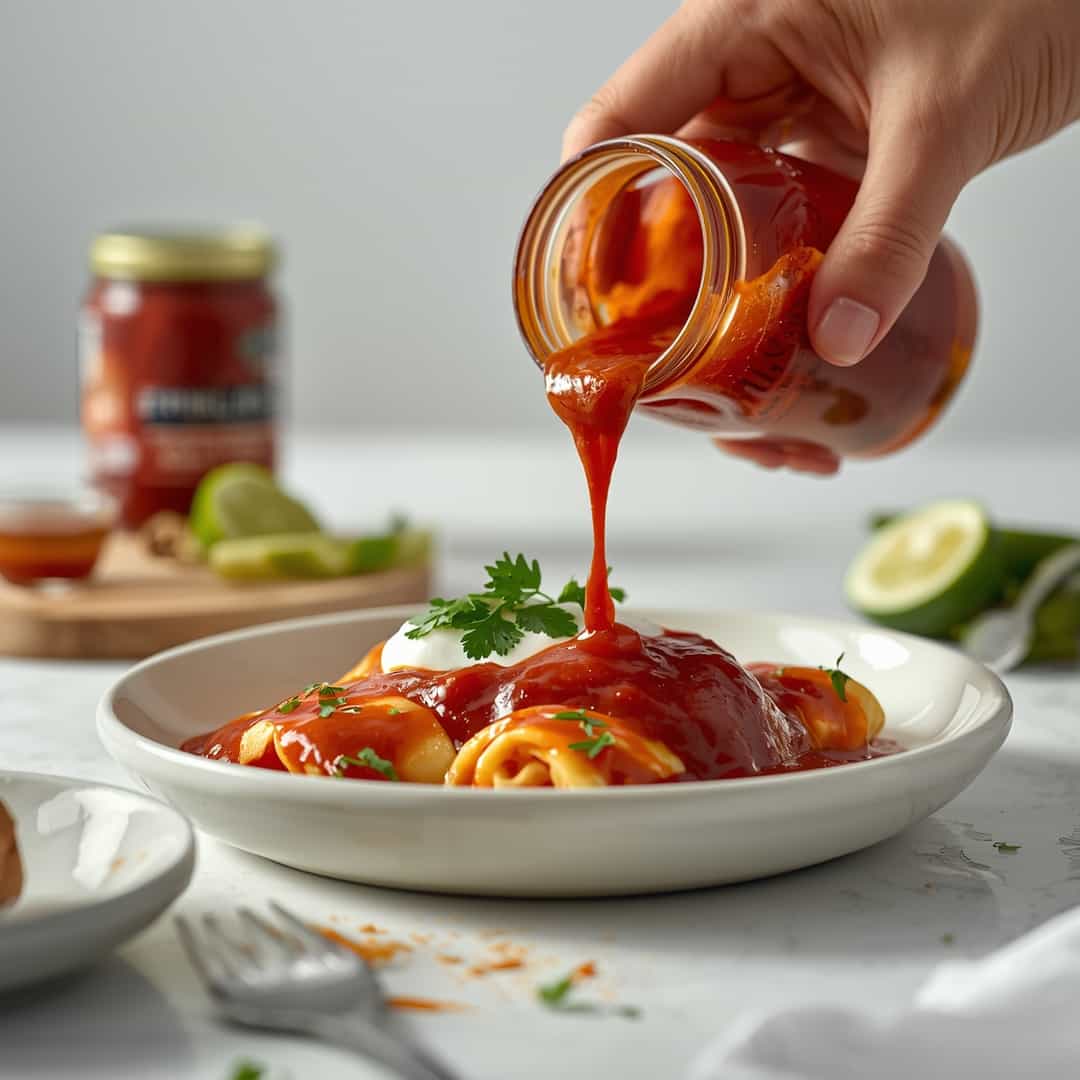
- Breakfast Burritos & Huevos Rancheros: Drizzle over eggs or incorporate into breakfast burritos for a spicy kick to start your day.
- Chilaquiles: The ultimate comfort food! Toss fried tortillas in this sauce, top with cheese, and serve with an egg.
- Mexican Lasagna/Casseroles: Layer with tortillas, seasoned meat or beans, and cheese for a hearty, baked dish.
- Taco/Tostada Topping: A spoonful adds incredible flavor depth to any taco or tostada.
- Slow Cooker Shredded Meats: Use as a braising liquid for pork or chicken to create tender, flavorful fillings for tacos, burritos, or bowls.
- Bean Dishes: Elevate simple black or pinto beans with a generous swirl of this sauce.
- As a Dip: Warm it up and serve as a savory dip with tortilla chips for a unique appetizer.
- Vegetable Scrambles: Mix into scrambled eggs or tofu scrambles for a vibrant, flavorful breakfast or brunch.
Top Tips for Perfecting Enchilada Sauce Canning
- Quality Spices Matter: The flavor of your enchilada sauce hinges on the quality and freshness of your spices. Use fresh chili powder, cumin, and oregano for the best results. Old, stale spices will yield a flat, muted flavor. Consider toasting whole cumin seeds and grinding them yourself for an extra burst of freshness.
- Achieve the Right Consistency: Don’t rush the simmering process. Allowing the sauce to simmer for the recommended 20-30 minutes not only deepens the flavor but also allows it to thicken properly. Remember it will thicken a bit more as it cools. If it’s too thick, add a splash more broth; if too thin, simmer a little longer.
- Don’t Skimp on Vinegar: The apple cider vinegar isn’t just for flavor; it’s crucial for canning safety. Its acidity lowers the pH of the sauce, making it safe for water bath canning. Do not reduce the amount specified unless you are an experienced canner familiar with pH adjustments and testing.
- Taste and Adjust: Always taste your sauce before canning. This is your last chance to adjust salt, pepper, or add a pinch of sugar if the tomatoes are particularly acidic. A well-balanced sauce will be delicious straight from the jar.
- Proper Headspace is Key: Leaving ½ inch headspace is critical. Too little can cause the lid to buckle or food to siphon out, potentially compromising the seal. Too much headspace can lead to an incomplete seal as there isn’t enough vacuum created during processing.
- Debubble Thoroughly: Air bubbles trapped in the jar can interfere with the sealing process and lead to an incomplete vacuum. Use a non-metallic utensil to gently release bubbles, and if necessary, top off with a bit more hot sauce to maintain headspace.
- Avoid Overtightening Bands: “Fingertip tight” is the rule. Overtightening the bands can prevent air from escaping during processing, leading to false seals or jars that don’t seal properly. The lids should be able to flex slightly.
Storing and Reheating Tips
Once your enchilada sauce canning efforts are complete and the jars have properly sealed and cooled, store them without the metal bands in a cool, dark, and dry place, like a pantry or cellar, for up to 18 months. Storing without bands prevents moisture from getting trapped, which can cause rust and potentially compromise the seal over time.
To reopen and use, simply twist off the lid (you might need a jar opener for vacuum-sealed lids). For reheating, transfer the desired amount of sauce to a saucepan and gently warm over medium-low heat, stirring occasionally, until hot. You can also microwave it in a microwave-safe bowl, stirring every minute to ensure even heating. This sauce is excellent for freezing too! If you decide not to can, pour cooled sauce into freezer-safe containers or heavy-duty freezer bags, leaving headspace for expansion. It will keep well in the freezer for up to 3-4 months. Thaw overnight in the refrigerator before reheating.
Final Thoughts
Mastering enchilada sauce canning is a game-changer for any home cook, offering unparalleled convenience and flavor in every jar. No more last-minute runs to the store or settling for mediocre sauces; with this recipe, you’re always prepared for delicious, authentic Mexican meals. Embrace this rewarding process and savor the satisfaction of a pantry stocked with homemade goodness!
Read more :
- Homemade Ketchup And Tomato Condiments
- Carolina BBQ Mustard Sauce Recipe
- Enchilada Sauce Homemade Canned
- our Pinterest
Enchilada Sauce Canning FAQs
Q1: Is water bath canning safe for enchilada sauce?
A1: Yes, if the recipe specifies an adequate amount of acid (like vinegar or lemon juice) to bring the pH down to a safe level (below 4.6), water bath canning is safe for enchilada sauce. Our recipe includes apple cider vinegar for this purpose. Always follow tested canning recipes for safety.
Q2: Can I adjust the spice level of the enchilada sauce before canning?
A2: Absolutely! You can increase or decrease the amount of chili powder, add a pinch of cayenne pepper, or include a diced jalapeño or serrano pepper when sautéing the aromatics to adjust the heat. However, do not alter the amount of vinegar, as it is crucial for canning safety.
Q3: My sauce looks a bit thin after simmering. Will it thicken more?
A3: The sauce will thicken slightly as it cools. If it’s still too thin for your preference after cooling, you can always re-simmer it for a bit longer before canning. Just ensure it’s piping hot when you ladle it into the jars for processing.
Q4: How do I know if my jars have sealed properly?
A4: After 12-24 hours of cooling, check the lids. A properly sealed lid will be concave (curved inwards) and will not flex or pop up when pressed in the center. If a lid does not seal, refrigerate that jar and use its contents within a week or reprocess it with a new lid (after checking the jar for defects).
Q5: Can I add fresh herbs like cilantro to the sauce before canning?
A5: It’s best to add fresh herbs like cilantro after opening a jar of canned sauce or when serving. Canning can diminish the flavor and vibrant color of fresh herbs, and some fresh ingredients can also alter the pH, making the sauce unsafe for water bath canning. Stick to dried herbs in the canning recipe.
Enchilada Sauce Canning
Ingredients
Equipment
Method
- Prepare your canning jars and equipment: Wash jars, lids, and rings in hot soapy water. Keep jars hot until ready to fill. Set up your water bath canner according to manufacturer instructions.Pint or Quart Jars Sterilized canning jars, Water bath canner
- In a large stockpot, heat the vegetable oil over medium heat. Whisk in the flour and chili powder. Cook, stirring constantly, for 2-3 minutes to make a roux, until fragrant.4 tbsp vegetable oil, 4 tbsp all-purpose flour, 6 tbsp chili powder
- Slowly whisk in the chicken or vegetable broth until smooth. Add the diced tomatoes (undrained), tomato paste, cumin, garlic powder, onion powder, cayenne pepper (if using), and salt. Bring to a simmer, stirring occasionally.4 cups chicken or vegetable broth, 1 can (14.5 oz) diced tomatoes, 1 can (6 oz) tomato paste, 1 tsp cumin, 1/2 tsp garlic powder, 1/2 tsp onion powder, 1/4 tsp cayenne pepper, 1 tsp salt
- Reduce heat to low and simmer for at least 30-45 minutes, stirring occasionally, to allow flavors to meld and sauce to thicken. The longer it simmers, the richer the flavor.
- Carefully use an immersion blender to blend the sauce until smooth. If you don’t have an immersion blender, transfer in batches to a regular blender and blend until smooth, then return to the pot. Stir in the apple cider vinegar.1 tbsp apple cider vinegar
- Ladle the hot enchilada sauce into the hot, sterilized canning jars, leaving 1/2 inch headspace. Remove any air bubbles with a non-metallic utensil. Wipe jar rims clean. Center new, warm lids on jars and apply bands finger-tight.
- Carefully place jars into the prepared water bath canner. Ensure jars are covered by at least 1-2 inches of water. Bring water to a rolling boil and process pint jars for 20 minutes (quart jars for 25 minutes). Adjust processing time for altitude if necessary.
- Turn off heat, remove canner lid, and let jars sit in the hot water for 5 minutes. Carefully remove jars from canner and place on a towel-lined surface, leaving space between them to cool completely (12-24 hours).
- Check seals: Lids should be concave and not flex when pressed. If any jars are not sealed, refrigerate and use within 1-2 weeks. Store properly sealed jars in a cool, dark place for up to 1 year.