
Ready to transform your mornings? This orange marmalade recipe delivers a burst of vibrant citrus flavor, perfect for spreading on toast, scones, or even as a glaze for savory dishes. Dive into the art of preserving and elevate your breakfast game with this surprisingly simple and incredibly rewarding homemade spread!
Key Ingredients for Zesty Homemade Orange Marmalade
To create this delightful orange marmalade, you’ll need just a few key ingredients. The quality of your oranges will significantly impact the final flavor, so choose wisely!
- 6 large navel oranges (approximately 3-3.5 lbs), organic if possible, thoroughly washed
- 6 cups granulated sugar
- 6 cups water
- 2 tablespoons lemon juice (freshly squeezed for best flavor)
How to Make Zesty Homemade Orange Marmalade
This orange marmalade recipe is surprisingly easy to make, delivering a delicious and satisfying preserve that will impress everyone. Its simplicity lies in a straight-forward cooking process that transforms humble oranges into a glistening, tangy-sweet spread. With a preparation time of about 20 minutes and a cooking time of 1.5-2 hours (plus cooling), you’ll soon be enjoying your own homemade marmalade, offering a richer, more complex flavor than store-bought versions.
● Step-by-Step Instructions:
Follow these detailed steps to create your perfect batch of homemade orange marmalade:
Prepare the Oranges:
- Carefully wash and scrub the oranges to remove any wax or impurities.
- Using a sharp vegetable peeler or a paring knife, thinly peel the oranges, trying to get just the orange zest layer and as little white pith as possible. Set the peels aside.
- Once peeled, slice the oranges in half and remove any seeds. You can do this over a bowl to catch any escaping juice. Roughly chop the orange flesh into small pieces.
- For the peels: Scrape off any excess white pith from the inner side of the peels. The pith contains pectin, but too much can make the marmalade bitter. Once pith is removed, thinly slice the orange peels into matchstick-sized strips (julienne).
Combine Ingredients & Macerate:
- In a large, heavy-bottomed pot or Dutch oven, combine the chopped orange flesh, thinly sliced peels, granulated sugar, water, and lemon juice.
- Stir everything together thoroughly until the sugar begins to dissolve.
- Cover the pot and let the mixture sit at room temperature for at least 2-4 hours, or ideally overnight in the refrigerator. This “maceration” step helps draw out the pectin and flavor from the fruit, and helps the sugar penetrate the fruit more effectively, resulting in better texture and flavor.
Cook the Marmalade:
- Place the pot over medium-high heat and bring the mixture to a rolling boil, stirring occasionally to prevent sticking.
- Once boiling, reduce the heat to a simmer. Cook uncovered, stirring frequently (especially towards the end), for 1-1.5 hours, or until the marmalade thickens and the peels become tender and translucent.
- Testing for Doneness: To check if the marmalade is ready, you can use the “cold plate test.” Place a small plate in the freezer before you start cooking. When you think the marmalade is ready, spoon a small amount onto the cold plate, wait 30-60 seconds, then push it with your finger. If it wrinkles and holds its shape, it’s done. If it’s still runny, continue cooking and re-test every 10-15 minutes. The temperature should be around 220°F (104°C) for a good set.
Jarring the Marmalade:
- Carefully ladle the hot marmalade into sterilized jars, leaving about 1/4 inch of headspace.
- Wipe the rims of the jars clean with a damp cloth.
- Place the lids and screw bands on tightly.
Process (Optional, for shelf-stability):
- If you plan to store the marmalade at room temperature for an extended period, process the jars in a boiling water bath for 10 minutes. This creates a vacuum seal.
- After processing, carefully remove the jars and let them cool completely on a wire rack. You should hear a “pop” as the lids seal. Check for seals by pressing the center of the lid; if it doesn’t give, it’s sealed.
Cool and Store:
- Allow the jars to cool completely at room temperature for 12-24 hours.
- Store sealed jars in a cool, dark place. Unsealed jars or opened jars should be stored in the refrigerator.
Why You’ll Love This Zesty Homemade Orange Marmalade
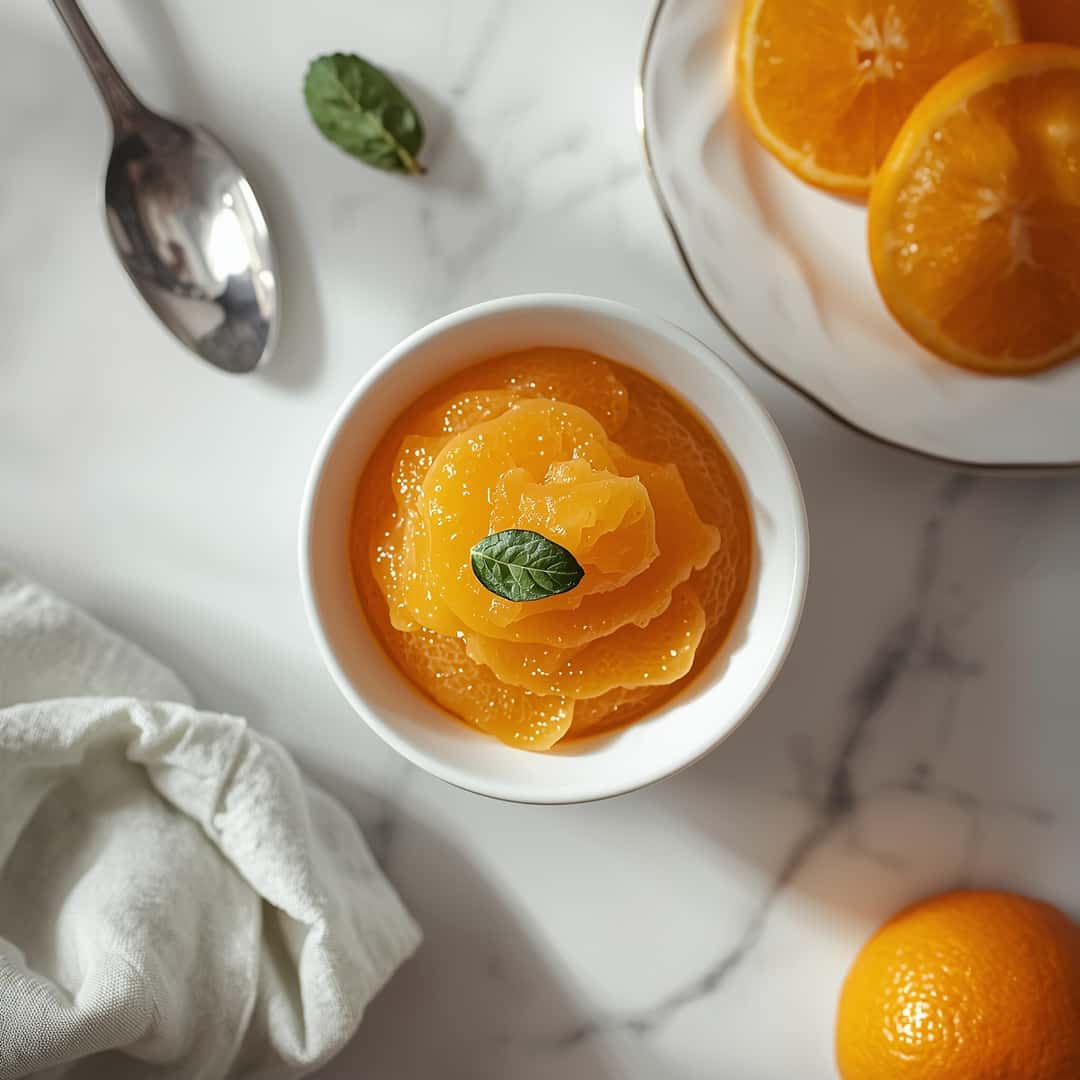
You’ll absolutely adore this orange marmalade recipe because its main feature is an unparalleled vibrant, tangy-sweet flavor profile that simply can’t be replicated by store-bought versions. The glistening, translucent peels suspended in the amber jelly are a testament to the satisfying process of making it yourself, and it tastes miles better than the often-syrupy commercial alternatives.
Beyond the incredible taste, making your own marmalade is a fantastic cost-saving benefit; turning seasonal oranges into a gourmet preserve is incredibly economical. Plus, the fresh orange zest and bright lemon juice infuse every spoonful with a natural brightness, offering a more nuanced and complex flavor than a simple fruit jam. It’s a bit like comparing a homemade croissant to a factory-made one – the effort is worth every delicious bite! Don’t just take my word for it; try this delightful recipe at home and discover its magic for yourself!
What to Serve Zesty Homemade Orange Marmalade With
This vibrant orange marmalade recipe is incredibly versatile and pairs beautifully with a range of dishes, both sweet and savory.
- Classic Breakfast Toasts: The most iconic pairing! Spread generously on crusty sourdough, a warm slice of brioche, or your favorite whole-wheat toast.
- Scones & Biscuits: A dollop of this marmalade transforms plain scones or buttermilk biscuits into a fancy treat, especially when served with clotted cream or butter.
- Yogurt or Oatmeal: Stir a spoonful into a bowl of plain Greek yogurt or hot oatmeal for a zesty, bright start to your day.
- Cheese Boards: It’s an excellent companion for a cheese board, particularly with creamy brie, tangy goat cheese, or sharp cheddar. The sweetness and tang cut through the richness of the cheese.
- As a Glaze: Mix with a touch of Dijon mustard and use it as a glaze for roasted chicken, pork tenderloin, or even grilled salmon. The citrus notes add an incredible depth of flavor.
- Dessert Topping: Drizzle over vanilla ice cream, plain cheesecake, or pancakes and waffles for an elevated finish.
- Beverage Pairings: A strong cup of black tea (like Earl Grey or English Breakfast) or a robust coffee complements the intense citrus notes of the marmalade. For something more refreshing, a glass of sparkling water with a hint of lemon would be delightful.
Top Tips for Perfecting Zesty Homemade Orange Marmalade
Making a perfect batch of orange marmalade recipe can be easy with these valuable tips:
- Choose the Right Oranges: Seville oranges are traditional for marmalade due to their high pectin content and bitter flavor, perfect for balancing with sugar. However, navel or Valencia oranges (which are sweeter and have less pectin) work wonderfully too, especially when supplemented with lemon juice. Always opt for organic if you’re using the peel, to avoid pesticides.
- Don’t Skimp on Pith Removal (but don’t remove all): The white pith contains pectin, which helps the marmalade set. However, too much pith can lead to a bitter taste. Aim to remove much of the thickest pith but leave a little behind to aid setting, especially if using sweeter oranges.
- Thinly Slice Peels: Uniform, thin slices of peel not only look beautiful but also become tender more easily during cooking. A mandoline can help achieve this, but a sharp knife works too.
- Maceration is Key: Don’t skip the overnight soak! This step allows the sugar to penetrate the fruit, helps extract pectin, and ensures a better texture and flavor in the final product.
- Patience with Cooking & Setting: Marmalade takes time to cook down and thicken. Resist the urge to rush it with very high heat, as this can burn the sugar. The “cold plate test” is your best friend for determining doneness; a good set will wrinkle when pushed. If it struggles to set, a small amount of added commercial pectin can help, but generally, patience is enough.
- Sterilize Your Jars Properly: This is crucial for food safety and shelf stability. Jars and lids should be sterilized in boiling water or a hot oven before filling with hot marmalade.
- Adjust Sweetness to Taste: While the recipe provides a good balance, you can adjust the sugar slightly based on the sweetness of your oranges and your personal preference. Keep in mind that sugar is essential for setting, so don’t reduce it too drastically.
- Common Mistake: Not Enough Lemon Juice: Lemon juice adds acidity, which helps with the pectin’s setting ability and brightens the flavors. Don’t omit it, especially if using sweeter oranges.
Storing and Reheating Tips
Proper storage is key to enjoying your delicious orange marmalade recipe for months to come.
- Storage (Shelf-Stable): If you’ve processed your jars in a boiling water bath (as described in the step-by-step instructions), sealed jars of marmalade can be stored in a cool, dark pantry for up to 1 year. Once opened, refrigerate the jar.
- Storage (Refrigerator Only): If you opt not to process the jars in a water bath, your marmalade needs to be stored in the refrigerator from the start. It will keep well for up to 3-4 weeks. Always ensure the jars are clean and sealed tightly.
- Freezing: Freezing is an excellent option for long-term storage if you prefer not to water bath process. Ladle cooled marmalade into freezer-safe containers, leaving about 1 inch of headspace to allow for expansion. Marmalade can be frozen for up to 6 months. Thaw overnight in the refrigerator before using.
- Reheating (if solid from fridge): If your marmalade has become very firm from refrigeration, you don’t typically “reheat” it in the traditional sense unless it’s for a specific application (like a glaze). Simply let it sit at room temperature for 10-15 minutes or gently warm a small amount in a microwave-safe dish for 10-15 seconds to soften it for easier spreading. Avoid overheating, as this can alter the texture.
Final Thoughts
This orange marmalade recipe is more than just a spread; it’s a jar of sunshine, capturing the vibrant essence of citrus for your enjoyment. It’s a surprisingly simple process that yields incredibly rewarding results, proving that the best flavors often come from your own kitchen. I truly hope you try making this delightful preserve at home and savor every spoonful!
Read more :
- Homemade Ketchup And Tomato Condiments
- Carolina BBQ Mustard Sauce Recipe
- Enchilada Sauce Homemade Canned
- our Pinterest
Zesty Homemade Orange Marmalade FAQs
Q1: Why is my marmalade not setting?
A1: Common reasons include not enough pectin (from the pith/seeds/lemon juice), not cooking it long enough to reach the gelling point (around 220°F/104°C), or using very ripe fruit which can have less natural pectin. Ensure sufficient cooking time and the cold plate test will confirm doneness.
Q2: Can I reduce the amount of sugar in the recipe?
A2: While you can slightly reduce sugar, remember that sugar is crucial for the marmalade’s set, preservation, and flavor balance. Drastically reducing it might result in a runnier product with a shorter shelf life. Stick close to the recommended ratio for best results.
Q3: What if my marmalade tastes bitter?
A3: A slight bitterness is characteristic of traditional orange marmalade, especially with Seville oranges. However, excessive bitterness usually comes from leaving too much white pith on the peels. Ensure you scrape off the majority of the thick pith.
Q4: Do I have to process the jars in a boiling water bath?
A4: Processing in a boiling water bath creates a vacuum seal, making the marmalade shelf-stable for long-term storage at room temperature. If you skip this step, the marmalade must be stored in the refrigerator and consumed within 3-4 weeks.
Q5: Can I use different types of oranges?
A5: Yes! While Seville oranges are traditional, Navel, Valencia, or even blood oranges can be used. Adjust the lemon juice accordingly, as sweeter oranges might need a bit more acidity to aid the set and brighten the flavor. The color and flavor will vary based on the orange variety.
Ingredients
Equipment
Method
- Combine the water, yeast and sugar in a bowl. Rest for 5 minutes.1 cup water, 1 tsp instant yeast, 1 tsp sugar
- Combine the flour and salt.2 cups all-purpose flour, 1 tsp salt
- Add the yeast mixture and knead until you get a soft ball.
- Place in a bowl and cover. Let rise for 30 minutes.
- Divide the dough and form pizzas.
- Top the pizzas with sauce and vegetables, cook for 15 minutes on the pizza stone.red sauce, 1/4 red onion, 1/4 green pepper, 1/4 red pepper, rosemary